Hearing Developmental Milestones
Hearing Developmental Milestones
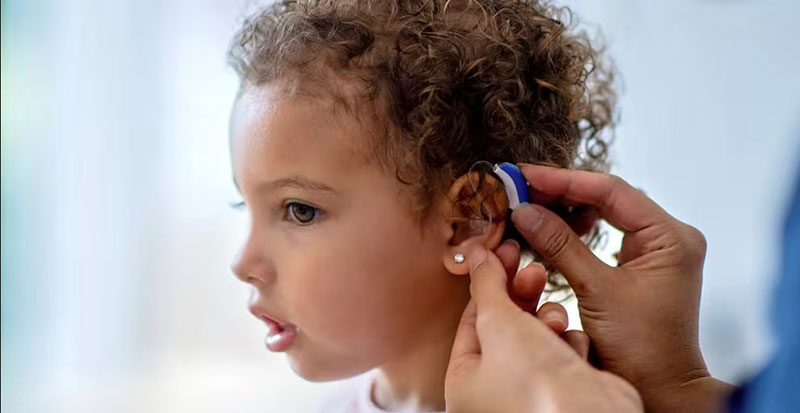
The ability to hear is a trait which many take for granted. We often underestimate the role our hearing plays in early childhood development and processing the world around us.
When your baby experiences a brain injury at birth, it may cause them to miss critical hearing developmental milestones. Deafness and other forms of hearing loss can set them behind in more ways than one.
Hearing is fundamental to speech development, building relationships, and sensing danger. Having hearing impairments from an early age can delay other important developmental milestones related to speech, language, and communication.
Hearing loss impacts millions of children across the United States. A large number of these cases stem from genetic mutations or unpreventable premature birth. However, babies can also develop hearing impairment when they experience birth complications like neonatal infections or oxygen deprivation during labor.
When medical professionals miss critical birth injury risk factors, they can put both the mother’s and baby’s lives in jeopardy. And even when the baby survives a birth injury, it can leave them with long-term complications like a hearing disability.
If you believe your child’s hearing developmental delays are the result of delivery room errors, don’t hesitate to contact us. Our national birth injury lawyers specialize in identifying when medical malpractice is responsible for causing preventable pain and suffering.
Contact Our Developmental Delay Attorneys Today
Developmental delays during childhood can have lasting impacts on a baby’s future. When their disabilities stem from preventable mistakes during birth, we believe families deserve compensation to afford the best possible care.
Our birth injury attorneys rely on decades of legal and medical expertise to uncover the root cause of these injuries. We can help your family pinpoint exactly where medical providers went wrong and hold them accountable for their actions.
Free Legal Consultation
Birth Injury Lawyers
(888) 987-0005Our Birth Injury Lawyers are available to meet you in your home or the hospital.
For over 40 years, our top-rated legal and medical research team has been securing results for our clients. Our vast network of medical experts and nine in-house nurses give us the edge over the other birth injury firms.
When you hire us to represent your family, you get more than just a lawyer on your side. We provide each client with an entire team of attorneys, patient-nursing advocates, and medical specialists.
Your team can assist you with any pressing updates or questions you may have while your case is open. But we understand that your child’s needs cannot just go on hold during litigation; that’s why we offer help today.
From the moment you sign with us, we will start addressing your family’s day-to-day needs. This includes things like finding medical specialists, scheduling appointments, obtaining medical records, providing transportation and lodging, and much more.
This help is available for your family at no upfront cost. We only charge attorneys’ fees on cases we win, and we only receive payment after you do.
We are proud to have an extensive track record of securing birth injury results for victims of medical malpractice. Reach out today to learn more about how our birth injury attorneys can best serve your child’s growth.

Recent Birth Injury Settlement:
After doctors failed to monitor a laboring mother’s blood pressure, her child experienced an HIE brain injury at birth. The damage led to significant developmental delays and impairments that followed them into early childhood.
Our specialized legal and medical division recovered $13,750,000 to help the family afford life changing developmental therapy.
What Are the Different Types of Hearing Loss?
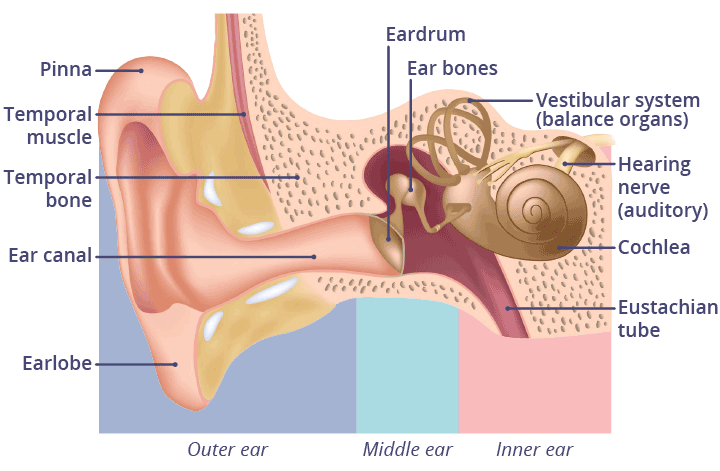
The ear and the brain work together to capture and process external sound waves into meaningful noise. Damage to structures within the ear or the brain can disrupt this process.
In general, there are three main categories for hearing loss: conductive hearing loss, sensorineural hearing loss, and mixed hearing loss.
What Is Conductive Hearing Loss?
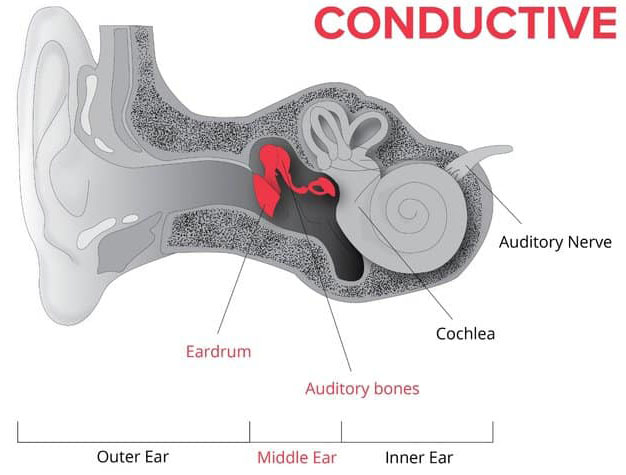
Conductive hearing loss occurs when someone takes damage to their outer ear, middle ear, or the ear canal. Damage to these parts blocks sound waves from reaching the inner ear, resulting in quiet or muffled hearing.
Conductive hearing loss is the most common type of hearing loss in children, but it is also the most treatable.
What Is Sensorineural Hearing Loss?
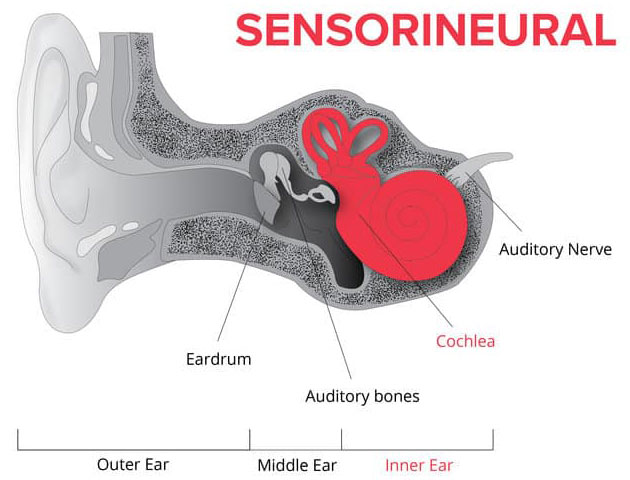
Sensorineural hearing loss (SNHL) occurs from damage to the inner ear. Deep inside the ear in the cochlea are thousands of tiny hair cells. These hairs are receptors for sound waves, turning them into electrical signals and sending them to the brain for interpreting.
Damage to these tiny hair cells can disrupt signals and lead to muffled or distorted noise. These hair cells do not regenerate, meaning many cases of sensorineural hearing loss are permanent.
Sensorineural hearing loss is common in aging adults and the elderly, but it can also affect children with birth injuries.
What Is Mixed Hearing Loss?
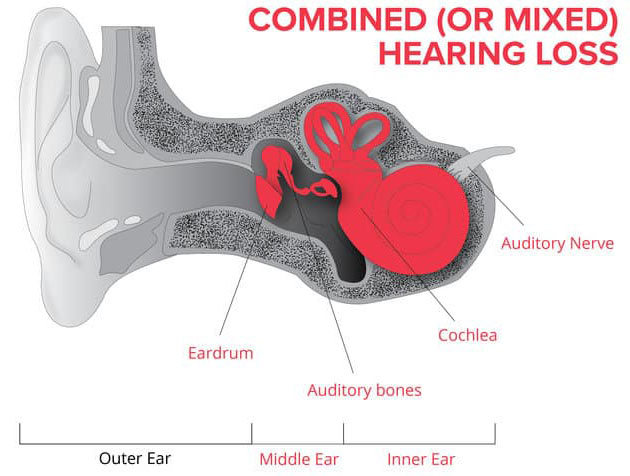
Mixed hearing loss is a combination of both conductive and sensorineural hearing loss. Injury to the outer and inner ear blocks sound from coming in while simultaneously disrupting sound processing in the brain.
Mixed hearing loss is the rarest and most serious form of hearing impairment, but specialists are able to treat it.
Hearing Loss in Children: Congenital Versus Acquired

Congenital means “present at birth,” whereas Acquired means “developed after birth”. However, these definitions can cause slight confusion in the context of birth injuries.
If a baby’s hearing impairment is congenital, it implies that it stems from genetic or prenatal factors. In other words, congenital conditions are generally not the fault of the doctor or delivery nurse.
However, babies sometimes acquire hearing loss as a result of a brain injury during labor. In these cases, even though the injury is technically present from the time of birth, it still counts as ‘acquired.’
Just because a condition is congenital does not always rule out the possibility of medical malpractice occurring. A medical professional’s inattention or failure to inform the family of abnormalities during pregnancy can still cause preventable harm.
What Causes Hearing Loss at Birth?
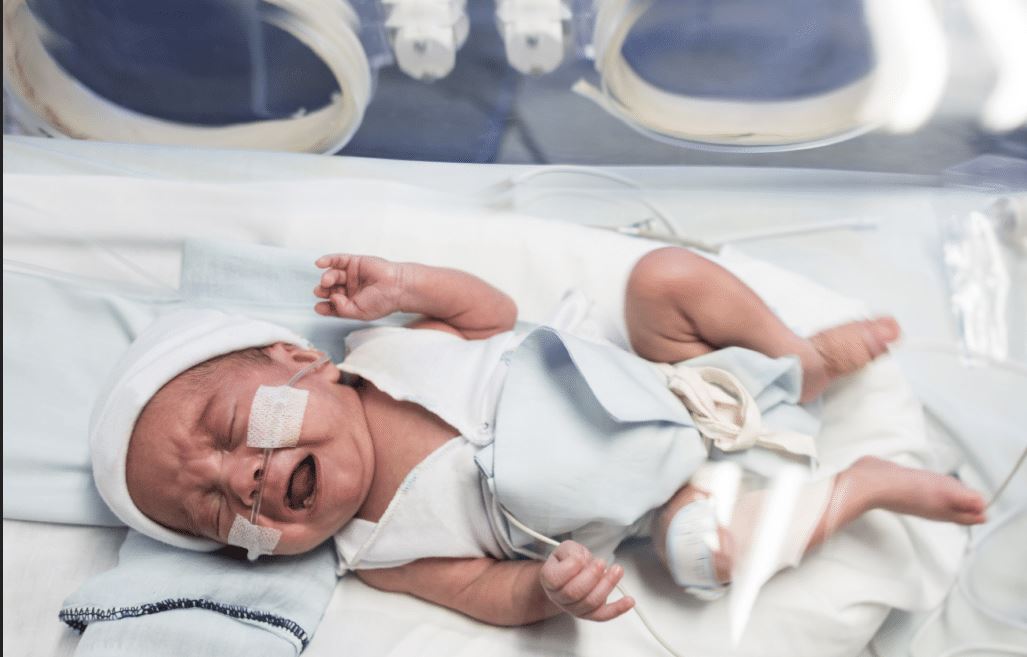
The Center for Disease Control (CDC) claims around 50% to 60% of hearing loss in babies stems from their genetics. These congenital cases are an unfortunate and unavoidable reality of hereditary traits.
However, many other factors can contribute to hearing impairment or an auditory processing disorder, by damaging critical structures within the brain and ear.
Auditory Processing Disorder (APD) resulting from birth injury is a neurological condition where the brain struggles to interpret sound, often caused by oxygen deprivation (hypoxia), low birth weight, premature birth, or trauma during delivery.
These birth injury related factors can include:
Premature Birth
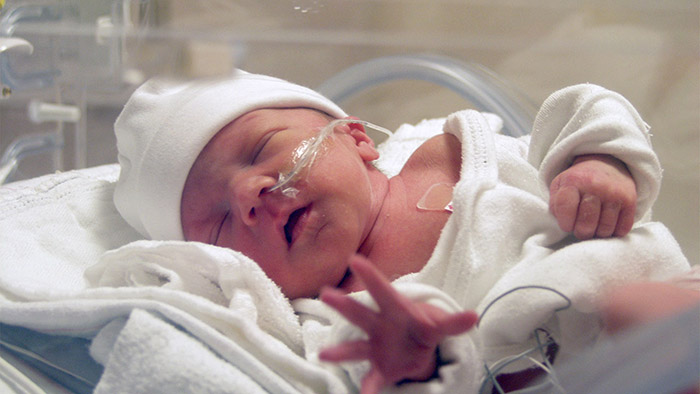
Babies born before 37 weeks gestation have a higher likelihood for birth complications and underdeveloped organ systems.
Babies experience the final stages of auditory development at the end of pregnancy. Missing the final weeks of brain development can increase their risk for sensorineural hearing loss.
Maternal Infections

Maternal infections like cytomegalovirus (CMV), rubella, herpes simplex virus, toxoplasmosis, and meningitis all pose a serious threat to the baby’s hearing.
An uncaught neonatal infection of the inner ear can lead to further damage of hair cells and cochlea structures.
Gestational Diabetes

A mother’s high blood sugar during pregnancy can place additional oxidative stress on the baby. The elevated glucose levels can sometimes impair blood flow to the small vessels within the ear and stunt its development.
A 2024 study found that children born to mothers with diabetes had a higher referral rate for early hearing screenings.
Preeclampsia

Similarly to gestational diabetes, high blood pressure during pregnancy can lead to vascular damage and reduced fetal blood flow. This can put the baby’s brain and other critical structures at risk, such as their heart, eyes, and ears.
Oxygen Deprivation During Birth
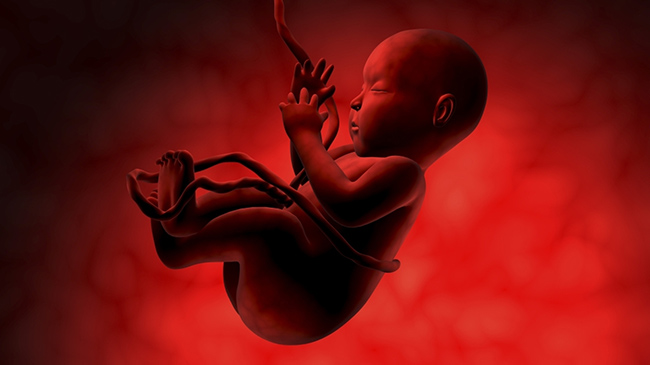
Babies who experience a temporary shortage in oxygen during birth (perinatal asphyxia) have a higher risk for brain injuries. Hypoxia at birth can affect the brainstem, which is the part of the brain responsible for processing auditory signals.
A hypoxic-ischemic injury often affects how the auditory nerves receive and process sound, increasing the risk of potential hearing impairments.
Other risk factors for hearing damage at birth include substance abuse and a family history of deafness or other impairments. While not all causes are preventable, doctors and delivery nurses can take action to manage the baby’s risk during labor. If they make careless mistakes or fail to intervene when issues arise, they may be liable for the baby’s injuries.
What Are Important Hearing Developmental Milestones?
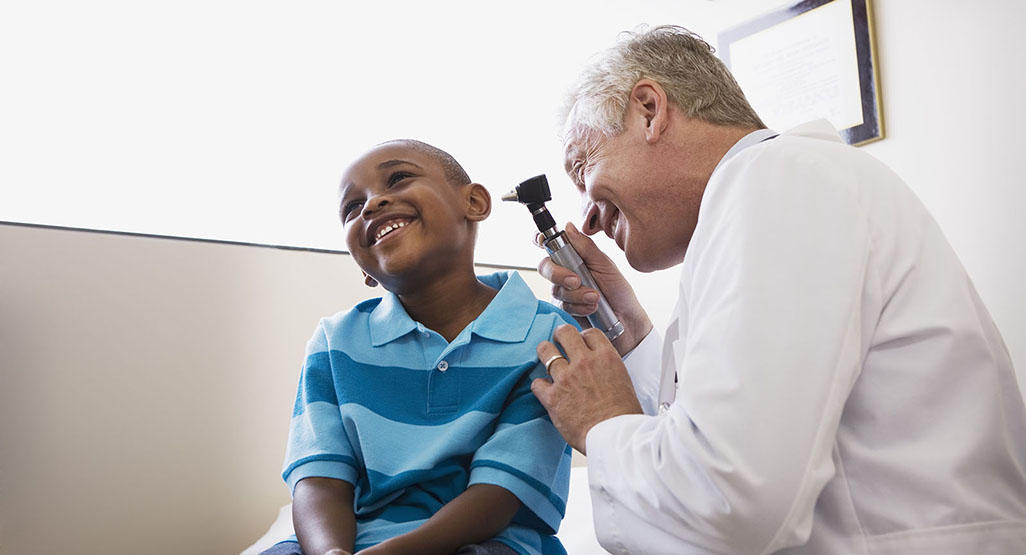
As your baby grows from an infant into a young person, you will watch them develop many new skills. Child development experts encourage parents to watch for certain “milestones” or new skills and behaviors as their baby ages.
Paying careful attention to a child’s hearing developmental milestones can reassure parents that their child is hearing as expected. Or it can alert them to the early signs of hearing impairment and push them to consult a specialist sooner.
What Are Hearing Milestones During Infancy?

Infancy typically refers to the baby’s first year of life. Even from the moment they’re born, most newborns will show signs that they are hearing the world around them.
The following hearing checklists show expected developmental milestones ranging from zero months to the baby’s first birthday.
Hearing developmental milestones are especially important in the baby’s first year because they are the foundation for other communication milestones. If a child cannot hear well, they will struggle to meet expected speech and language development for their age.
If you believe your baby may be suffering from hearing impairment, do not delay a developmental screening with a specialist.
What Are Hearing Milestones in Toddlers?
By the child’s early toddler years, they will likely be developing skills at faster speeds. This is the age when most children begin taking their first steps and saying their first words. However, they may experience developmental delays in these areas when they cannot hear properly.
The following checklists show expected hearing developmental milestones during the baby’s toddler years (ages 1 to 3):
A child’s hearing developmental delays will become clear by the time they reach their second or third birthday. If they are still falling short of reaching normal hearing developmental milestones, consider reaching out to a specialist.
What Are Early Childhood Hearing Milestones?

By age 3, most children are very sociable with their peers and the people around them. As they prepare to enter kindergarten, these children will undergo mandatory screenings for their hearing and vision.
The following checklists show expected hearing developmental milestones during the early childhood years (ages 3 to 5):
How is Childhood Hearing Impairment Treated?
When your child is falling behind on their hearing developmental milestones, early intervention is critical. Getting a head start on diagnosing and treating hearing impairments can prevent further delays in speech and communication.
The American Academy of Pediatrics recommends developmental screenings for children as early as 9 months old. However, signs of hearing impairment can show up even before then. In these cases, seeking early hearing detection and intervention services can be beneficial.
A trained specialist (such as an audiologist or speech-language-hearing pathologist) will assess your child’s skills using their own benchmark checklists. The types of skills they look for will depend on the child’s age.
If they determine your baby may have a hearing impairment, they will usually conduct further testing to determine the cause. They may perform a series of hearing tests, including:
- Tympanometry Test: an exam that checks the eardrum for outer ear damage. The specialist will place a probe inside the ear that pushes air through the canal to check for vibrations. They can use the results to diagnose conductive hearing loss.
- Otoacoustic Emissions Test: an exam that checks inner ear function by assessing the sounds coming from the middle ear. The specialist places a small microphone into the child’s ear to pick up the emissions (which appear on a monitor). If there are no emissions or only very small sounds, it can suggest sensorineural hearing loss.
- Auditory Brainstem Response Test: an exam that measures brainwave activity in response to sound stimulation. The specialist places earphones on the child and sticks electrodes to their skin. The electrodes record the brain’s response to sounds played through the headphones. Low brainwave activity can help them diagnose sensorineural hearing loss.
How to Treat Conductive Hearing Loss?
Specific treatment plans for conductive hearing loss will depend on the root cause of the problem. If the child’s impairments stem from an ear infection, they may need ear drops or other medications to clear it.
Sometimes the blockage stems from a cyst or tumor within the eardrum. If this is the case, the baby or child may need surgery to remove it. Surgery can also be a viable option for when the child’s conductive hearing loss stems from damaged ear bones (ossicles).
Sometimes children with conductive hearing loss experience lasting impairment, even after medications and surgery. When this happens, their audiologist may recommend a hearing aid to adjust the levels of some sounds.
How to Treat Sensorineural Hearing Loss?
Sensorineural hearing loss (the more common type of hearing loss when babies experience brain damage) is typically harder to treat. This is because damage to the inner ear hair cells is permanent and isn’t as simple as sound blockage.
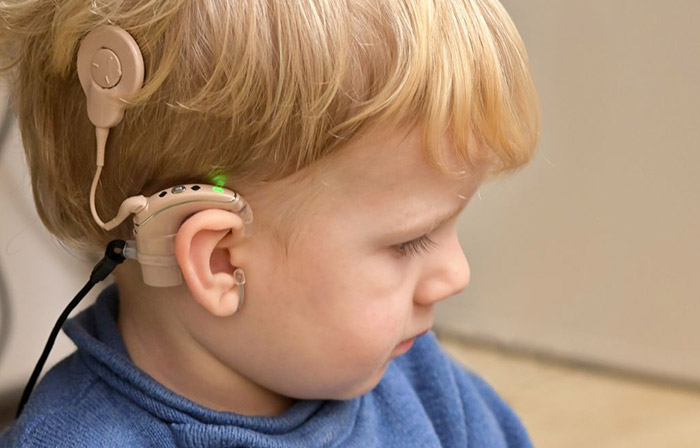
Specialists will often recommend hearing aids for children with SNHL, but they sometimes aren’t enough to restore full hearing. In severe cases, they may move to implant cochlear devices.
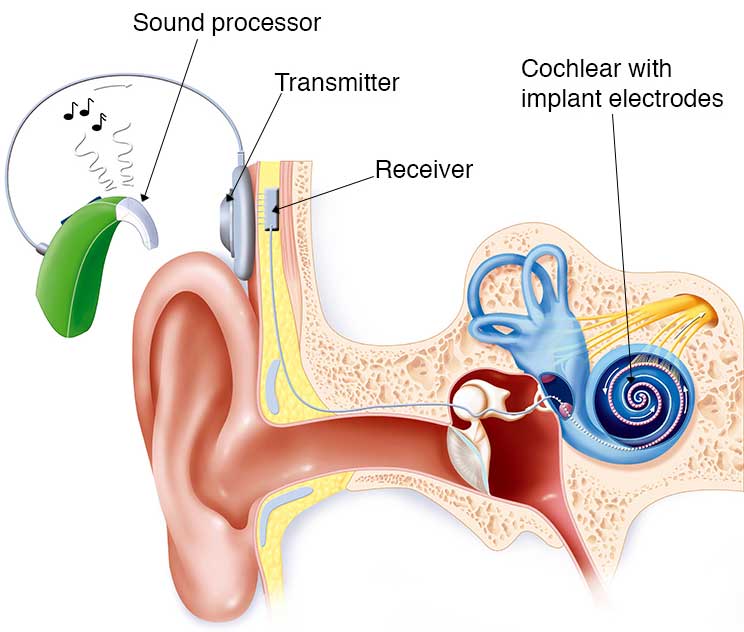
A cochlear implant is a device that bypasses the inner ear to deliver sound to the brain through alternative pathways. Doctors will surgically place the hearing aid and wires behind the child’s ear through an incision and stitches.
While cochlear devices do not “cure” nor restore hearing, they can help people with hearing impairment to hear more sounds. Children with cochlear implants usually undergo auditory therapy to practice understanding speech and sounds with the device.
It’s important that parents seek out treatment when they first notice signs of their baby missing hearing developmental milestones. Getting them the care they need from an early age will promote their growth and prevent further developmental delays.
Did Medical Mistakes Cause My Baby’s Developmental Delays?

When children experience developmental delays, it’s easy for parents to blame themselves. They may instinctively want to take the blame for their child’s communication difficulties.
But the reality is that hearing impairments and other disabilities are multifaceted. A child’s issues can begin way before birth with genetic abnormalities and defects. And occasionally, a medical professional’s errors in the delivery room can contribute to the problem and cause further harm.
Examples of Medical Mistakes Causing Hearing Impairment
Our dedicated birth injury lawyers have witnessed hundreds of cases where a child’s disabilities started with negligent medical care. Examples of medical malpractice that can contribute to hearing loss and other developmental delays include:
- Missing the signs of birth defects or genetic abnormalities during prenatal testing appointments.
- Failing to treat pregnancy complications like preeclampsia or gestational diabetes, which can increase the risk for birth complications.
- Missing or failing to treat a maternal infection like cytomegalovirus, a disease known to cause hearing loss
- Failing to notice signs of fetal oxygen deprivation, such as concerning heart rate patterns on the fetal monitoring strip.
- Needlessly delaying an emergency C-section delivery and prolonging a child’s hypoxia or anoxia.
If you suspect your child is not meeting developmental milestones because of preventable injuries at birth, our attorneys can help. Our nationally recognized birth injury team will thoroughly investigate the facts and hold responsible medical providers accountable.
What Is the Statute of Limitations in a Birth Injury Case?

A statute of limitations (SOL) is a law that sets a time limit on how long an injured person has to file a lawsuit after an accident. It is essential to understand that statutes of limitations vary based on the case and the state where you file. For instance, the deadline for birth injury claims is typically different from other claims, such as injury to private property.
Generally, the clock starts ticking on the date the injury occurred. However, there are exceptions to this rule. In some cases, the statute of limitations starts when a person discovers or reasonably should have discovered an injury. When dealing with government agencies, SOLs can become even more complex.
For example, special rules may apply if you are pursuing a claim against:
- A federal employee
- Someone employed by a military hospital, Veterans Administration facility, or a federally funded medical entity
In these cases, you may need to file a birth injury claim under the Federal Tort Claims Act (FTCA). In FTCA cases, claimants must go through certain administrative procedures before filing a lawsuit. In some states, you may have less time to give notice if:
- The negligent party was a local or state government hospital
- The doctors and medical providers are employees of a governmental entity
If you file your case outside of the statute of limitations, the court will typically dismiss it. This means you will not be eligible to recover compensation for you or your child’s injuries.
Determining when a statute of limitations begins on your case can be tricky. If you are considering pursuing compensation for a birth injury, contact an attorney as soon as possible.
How Can Our Birth Injury Attorneys Help?
Each child grows at their own pace, but missing important developmental milestones can signal a larger underlying issue. If you believe your child’s hearing impairments are the result of a preventable birth injury, our attorneys can help.
The compensation our clients receive helps them pay for their child’s current and future medical treatment, therapy, and assistive equipment. These treatments can be instrumental in supporting developmental growth and improving your child’s quality of life.
Our Process
Our team of specialized birth injury attorneys, nurses and paraprofessionals is here to help your family seek justice and compensation. We use our detailed medical case review process to assess claims and hold negligent parties responsible.
We start by learning more about your pregnancy by gathering records to determine what happened during and after your delivery. We will determine whether healthcare professionals properly responded to your labor and delivery complications like prolonged labor or birth asphyxia.
We will consult with our network of medical experts who review your records and provide their professional opinion. If we feel medical negligence caused your baby’s hearing impairments, then we will meet with you to discuss further. If you decide to hire us, we will waste no time filing your claim and building the case.
At no point in our legal intake process will we ask you to pay anything. The medical review of your case and the consultation are free. We will only charge a pre-agreed percentage outlined in the client-attorney retainer contract. We will never charge families unless we recover compensation for their child.
The sooner you reach out, the sooner we can investigate your case and gather evidence to support your claim. You can contact us today to schedule your free consultation by calling our toll-free line at (888) 987-0005. We are also reachable through filling out our online request form.
National Birth Injury Law
Our National Birth Injury Attorneys, nurses, and support staff understand that parents of children with birth injuries feel overwhelmed. So, every client has the attention and support of a team of trained, compassionate professionals. But we don’t just offer compassion.
We offer a process to help you discover whether your child’s birth injury, HIE, cerebral palsy or brain injury at birth was caused by medical malpractice.
Call our offices today at (888) 987-0005 for experienced assistance in a free consultation.
Quick Links
Testimonials
- Lyric C. I feel like our voice was heard in a sense of what can possibly go wrong in a delivery and finding us answers. I feel with our settlement, we are now in a comfortable position to provide for our son.
- Lyssa L. They are not just people that say “hey let's get you money and let's go” The law firm was very thorough with us. It was awesome. I don't want to cry, because I think about and it's amazing that they were able to help me and that we were able to help my son and get the story out there.
- Jay C. Throughout the process, one thing was clear to us, the ultimate interest of our child was the utmost concern of Max and his team and as parents navigating a situation like that, that was refreshing to know we had them firmly on our side. I highly recommend them.
Popular Cities
- ★ Dallas Birth Injury
- ★ Houston Birth Injury
- ★ Atlanta Birth Injury
- ★ Chicago Birth Injury
- ★ Philadelphia Birth Injury
Locations
★ Dallas
11551 Forest Central Drive, Ste. 300
Dallas, TX 75243
★ Houston
12929 Gulf Freeway, Ste. 111
Houston, TX 77034