Cerebral Palsy and Multiple Sclerosis
How Are Cerebral Palsy & Multiple Sclerosis Different?

Cerebral palsy and multiple sclerosis are conditions that affect the central nervous system and have similar symptoms. Both involve neurological damage; however, their causes, symptoms, and progressions vary significantly.
To understand the similarities and differences between multiple sclerosis and cerebral palsy, some background information is important to know first.
What is Cerebral Palsy?

Cerebral palsy (CP) is the most common physical disability in children marked by a group of non-progressive, but usually changing, physical and neurological disorders. Brain cells send electrical signals to different muscles of the body via spinal cord. Cerebral palsy disrupts these signals, resulting in possible paralysis or jerky, unpredictable movements.
Gross motor skills are only possible through the communication between the brain and muscles. Some children with CP may be unable to speak clearly, walk on their own, or control facial movement as a result.
Similarly to multiple sclerosis (MS), different types of cerebral palsy are classified depending on symptoms. For example, Spastic Cerebral Palsy is the most common type, appearing in roughly 80% of cases. This type is marked by severe muscle stiffness that primarily affects the legs and arms.
Dyskinetic Cerebral Palsy is the second most common form and causes several movement disorders. Finally, Ataxic Cerebral Palsy is the rarest subtype and stems from damage to the cerebellum. In some cases, these types can overlap, usually because of a more severe brain injury that damages several parts of the brain.
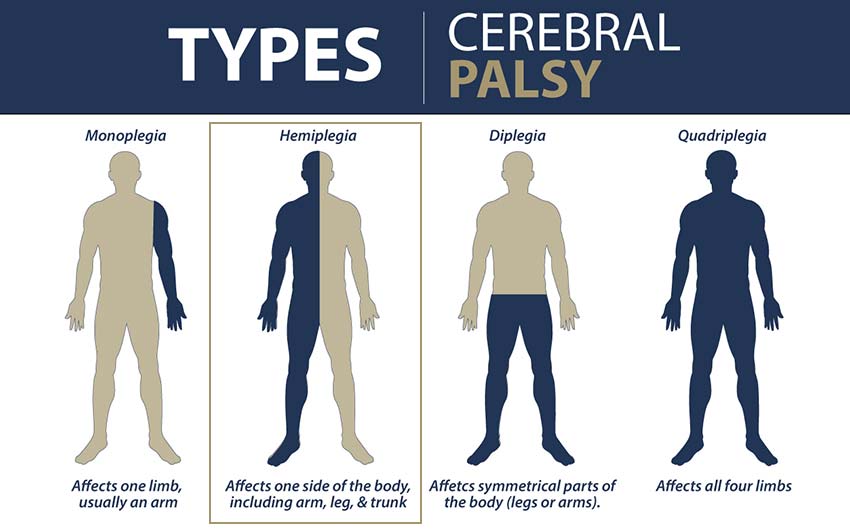
What Causes Cerebral Palsy?
All cases of cerebral palsy (CP) stem from either underdeveloped brains or brain injuries. These injuries often happen at birth, but brain damage can occur during early childhood as well.
Nonpreventable factors such as premature birth or genetic brain malformations can cause CP. In other cases, medical errors and negligence during labor and delivery can cause brain damage at birth.
Severe neonatal infections like meningitis or a high fever during childhood years can damage the baby’s developing brain. This can sometimes happen at birth as the result of an uncaught or insufficiently-treated maternal infection transferring to the baby.
Head injuries at birth are another common cause of cerebral palsy. Injuries like an intracranial hemorrhage (brain bleed) and other outcomes of head trauma can cause irreversible injury to the child’s brain.
Other common causes at birth include neonatal strokes, seizures, and prolonged oxygen deprivation (birth asphyxia) during labor and delivery.
Some cerebral palsy cases stem from genetic mutations and other factors like prematurity. These factors fall outside of a medical professional’s control. However, birth injuries are a leading cause of cerebral palsy. Medical malpractice increases the risk of preventable injuries causing irreversible brain damage at birth.
What Are the Symptoms of CP?

Most cerebral palsy symptoms relate to issues with movement and muscle tone. This is because brain damage at birth impacts the pathway for motor neurons to travel through the nervous system. If motor neurons cannot travel through the spinal cord and nervous system, they are unable to trigger muscle reflexes.
Muscles are in a constant state of tension to maintain posture, even when we don’t realize it. This continuous state of tension, contraction, and resistance within the muscle fibers is our muscle tone.
The brain injury that causes cerebral palsy disrupts the signals that direct the muscles on how to move. This can create unwanted and uncontrollable changes in muscle tone, making for irregular posture and involuntary movements like kicking, flailing, and twisting.
- Spasticity is where muscles randomly contract and tighten
- Rigidity occurs when a muscle contracts and stays contracted for extended periods
- Dystonia causes slow and repetitive twisting movements that can affect posture and range of motion
- Hypotonia is too much muscle tone which may make children appear “floppy” or “limp”
Common Symptoms of Cerebral Palsy
- Paralysis affecting a limb, one side of the body, symmetrical parts of the body, or all four limbs
- Delayed reflexes
- Abnormal walking patterns
- Uncontrollable shaking (tremors)
- Swallowing or speech disorders
- Seizures and epilepsy
- Vision impairments
- Missed developmental milestones
- Size abnormalities
- Cognitive impairment
How is Cerebral Palsy Treated?

Symptoms of cerebral palsy vary widely from one person to the next. Cerebral palsy treatment plans depend on the type of cerebral palsy and the affected body functions.
The goal of cerebral palsy treatment is not to cure cerebral palsy – it is incurable. However, early intervention with the right medication, surgery, therapy, and other treatments can help children with CP develop to the fullest possible extent. Some therapies include:
- Baclofen treatment (muscle relaxant)
- Physical therapy
- Occupational therapy
- Speech therapy
- Adaptive equipment for mobility, communication, and recreation
- Selective dorsal rhizotomy to reduce spasticity
- Osteotomy surgery for tension release
In recent years, modern advancements in neuroscience have created new opportunities for treating a child’s cerebral palsy.
Stem cell therapy involves injecting stem cells into the child’s brain or spinal cord, repairing damaged cells and promoting neuro-regeneration. The stem cells develop into neurons, which then rebuild connections with other cells so they can deliver messages to muscles.
Botox injections for cerebral palsy work by temporarily paralyzing specific muscles, reducing muscle stiffness, and improving range of motion. While not a permanent fix, injections can provide temporary relief and improve a child’s positioning and range of motion.
What is Multiple Sclerosis?
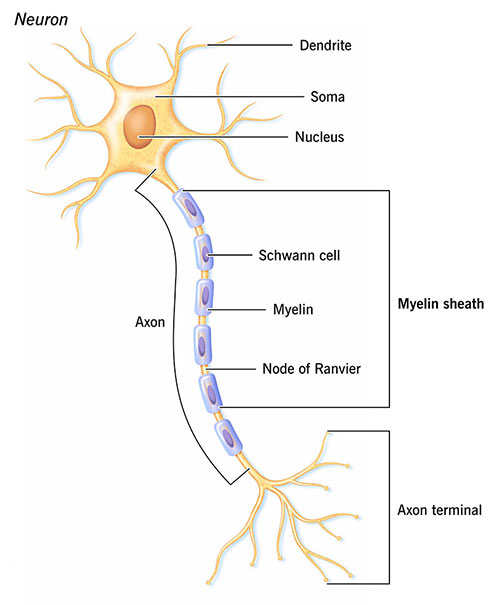
Multiple sclerosis (MS) is a chronic autoimmune disorder that affects the central nervous system. With this condition, the immune system attacks the healthy myelin cells that are critical for proper nerve cell function.
" target="_blank">Myelin (also called the myelin sheath) makes up the protective layer that coats nerve fibers. The myelin sheath is made of fat (lipids) and protein that creates a protective insulation for the nerve cell. It is responsible for moving signals between the brain and the rest of the body to control functions like sensation, vision, and movement.
As multiple sclerosis progresses and nerve cell bodies are damaged, the outermost layer of the brain shrinks (cortical atrophy). The brain, spinal cord, and nerves that supply your eyes can all be impacted and may lead to disability.
What Causes Multiple Sclerosis?
Experts do not know why the immune system begins to destroy myelin that then causes multiple sclerosis (MS). Research suggests that some factors may create an elevated risk for developing MS, including:
- Low levels of vitamin D
- Smoking
- Toxin exposure, like pesticides and secondhand smoke
- Obesity during childhood
- Exposure to a virus
- Genetic predisposition
Women of Northern European descent between the ages of 20 and 40 have a higher risk of developing MS than others. However, MS can affect anyone, including children in rare cases.
What Are the Types of Multiple Sclerosis?
Nearly one million adults live with multiple sclerosis (MS) in the United States. The type and stage of MS can affect symptoms and treatment options. There are five types of multiple sclerosis that are defined by different symptoms.
Clinically Isolated Syndrome (CIS)
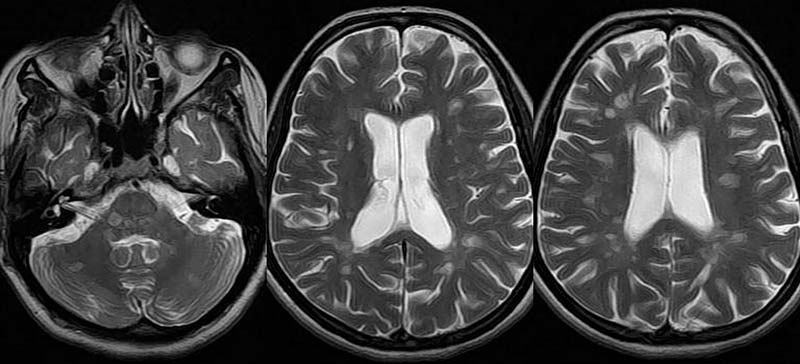
CIS is defined by a single attack of multiple sclerosis symptoms followed by complete or near-complete recovery. Inflammation and myelin damage can cause the episode and may develop into MS. Magnetic resonance imaging (MRI) and other tests may show damage in the central nervous system and result in a full diagnosis of MS.
Relapsing-Remitting Multiple Sclerosis (RRMS)
In RRMS, symptoms come as recurrent attacks with periods total or partial recovery in between. This is the most common way that MS symptoms behave. About 85% of people diagnosed with MS have this type and suffer relapses of symptoms followed by remission. Weeks, months, or years may pass before another attack happens.
Secondary Progressive Multiple Sclerosis (SPMS)
In many cases, relapse-remitting MS evolves into secondary progressive MS. In this secondary stage, nerve damage accumulates and symptoms worsen. Sudden attacks of symptoms are less likely to happen and are replaced by steady symptoms with little to no remission periods. Treatments may delay or prevent the evolution to this stage, but the transition can happen even with treatment.
Primary Progressive Multiple Sclerosis (PPMS)
Primary progressive MS is marked by a gradual worsening of symptoms from the first time they occur. This type is less common and typically has no periods of clear relapses or remission.
Radiologically Isolated Syndrome (RIS)
Radiologically Isolated Syndrome (RIS) is among the rarest types of MS. In this course, an individual presents abnormal MRI results that look like MS are not accompanied with MS symptoms. Attacks or progression of MS may happen in the future.
There are three rare variants of MS as well. This includes tumefactive MS, Balo’s concentric sclerosis, and Marburg variants MS.
What Are the Symptoms of Multiple Sclerosis?

Damage to the myelin sheath disrupts the nerve signals that control vision, movement, and sensation. Early signs of MS include changes to your vision, muscle weakness, and numbness or abnormal sensations in your body. Other common symptoms include:
- Clumsiness
- Dizziness
- Mental or physical fatigue
- Loss of balance or coordination
- Pain or tingling in the arms, legs, body, or face
- Mood changes
- Difficulty with bladder regulation
- Muscle stiffness or spasms
- Difficulty with cognitive function (memory, concentration, judgment, etc.)
Symptoms vary for every case of MS and may change in severity daily. It is unlikely that all these symptoms will be experienced at the same time. Muscle stiffness, weakness, or tremors may be severe enough to require assistive mobility equipment like a wheelchair.
How is Multiple Sclerosis Treated?
There is no cure for multiple sclerosis, and there is no single test used to diagnose the condition. A physical exam, a neurological exam, and further testing are required to diagnose MS. Tests may include:
- Magnetic resonance imaging test (MRI)
- Lumbar puncture
- Blood and urine tests
To minimize further nerve damage, symptoms can be managed to prevent further complications. This includes taking medications, mental health counseling, and physical, occupational, or speech therapy. Depending on the symptoms, other treatment options include:
- Using assistive mobility devices
- Wearing glasses or taking medications for vision problems
- Antiseizure or antispasmodic medications for pain
- Deep brain stimulation for muscle spasms
- Corticosteroids injections to suppress immune system
What Are the Key Differences Between CP & MS?

Cerebral palsy and multiple sclerosis have many similar qualities and symptoms. They both involve neurological damage, but they have key differences that set them apart, including:
- CAUSE
- Cerebral Palsy is caused by a traumatic brain injury before, during, or after birth, which can be due to medical malpractice.
- MS is caused by an autoimmune disease of the central nervous system.
- MOBILITY
- 40% of children with Cerebral Palsy have limited walking, and 30% use wheelchairs or walkers.
- In MS, mobility limitations usually occur later in the disease course. About 76% of individuals require ambulatory aid after 45 years of having MS.
- PROGRESSION
- Cerebral Palsy begins at birth and lasts a lifetime with non-progressive symptoms.
- MS can develop at any point in life and is a progressive disease, meaning that symptoms can worsen over time.
- AGE
- Cerebral palsy occurs before, during, or shortly after birth.
- Multiple sclerosis is typically developed between the ages of 20 and 40, most commonly in women of Northern European descent.
- ASSOCIATED CONDITIONS
- Intellectual disability, epilepsy, and vision impairment are prevalent in Cerebral Palsy cases.
- Urinary and respiratory infections, seizures, other autoimmune diseases, and visual abnormalities are prevalent in MS cases.
- PREVALENCE
- Between 1 to 4 children per 1,000 live births have cerebral palsy. Males are more likely to have CP than females.
- About one million people in the United States have MS, which is more prominent in females.
- TREATMENT
- Treatments for cerebral palsy typically include physical therapy, orthopedic interventions, and symptom management.
- MS treatments include medications and rehabilitation to manage symptoms.
Cerebral palsy and multiple sclerosis can affect an individual’s mobility and independence. This may require assistive mobility devices, such as a wheelchair, and speech, occupational, and physical therapy.
There are no known cures for either condition. Medication, therapy, and adaptive medical devices can extend abilities and improve quality of life. Diagnosing both conditions can be similar as well, with tools like MRIs assessing damage to the brain.
Cerebral Palsy and Medical Malpractice

A cerebral palsy diagnosis can stem from a multitude of birth complications that interact to cause brain damage. But no matter the source, parents deserve to know when preventable medical mistakes amplify the complications of their child’s conditions.
Missing pregnancy complications, improperly monitoring fetal heart rates, or delaying C-sections can all lead to a baby’s preventable brain injury. If a family believes medical negligence worsened a child’s brain damage at birth, legal support may be an option. A cerebral palsy lawyer can review the medical records and circumstances to assess whether a claim exists.
Families who have experienced the effects of brain injuries from negligent medical care deserve to know whether they were avoidable. Our cerebral palsy attorneys specialize in birth injury malpractice, helping families seek compensation when negligence causes lifelong conditions.
Our team will thoroughly investigate the facts, holding responsible parties accountable by pursuing medical malpractice claims.
What Is the Statute of Limitations in a Birth Injury Lawsuit?

A statute of limitations (SOL) is a law that sets a time limit on how long an injured person has to file a lawsuit after an accident.
It is essential to understand that statutes of limitations vary based on the case and the state where you file. For instance, the deadline for birth injury claims is typically different from other claims, such as injury to private property.
Generally, the clock starts ticking on the date the injury occurred. However, there are exceptions to this rule. In some cases, the statute of limitations starts when a person discovers or reasonably should have discovered an injury. When dealing with government agencies, SOLs can become even more complex.
For example, if the party that injured you was:
- A federal employee
- Employed by a military hospital, Veterans Administration facility, or a federally funded medical entity
Birth Injury Claim Under Federal Tort Claims Act (FTCA)
You may need to file a birth injury claim under the Federal Tort Claims Act (FTCA). In FTCA cases, claimants must go through certain administrative procedures before filing a lawsuit. In some states, you may have less time to give notice if:
- The negligent party was a local or state government hospital.
- The doctors and medical providers are employees of a governmental entity.
If you file your case outside of the statute of limitations, the court will typically dismiss it. This means you will not be eligible to recover compensation for you or your child’s injuries.
Determining when a statute of limitations begins on your case can be tricky. If you are considering pursuing compensation, contact a birth injury attorney as soon as possible.
How Can Our Cerebral Palsy Attorneys Help?

A detailed expert review of the facts and circumstances of your pregnancy and your child's birth can reveal many things. Namely, it can determine whether a child’s cerebral palsy diagnosis and related symptoms were the result of medical malpractice.
*Not all cerebral palsy is caused by medical negligence during birth — some may stem from genetic factors, prenatal issues unrelated to care, prematurity, or unknown causes. Our National Cerebral Palsy Lawyers offer free case evaluations with a medical expert to determine whether negligence played a role in your child's birth injury.
Our Process
Our team of cerebral palsy attorneys specialize in birth injury medical malpractice and can help assess your potential cerebral palsy case. We use our detailed medical negligence case review process to take in your information and begin learning more.
We start by gathering information about your pregnancy by examining records to determine what happened during and after your delivery. This includes evaluating the fetal heart rate strips during labor and any action medical professionals took in the NICU.
We will call in skilled medical experts who review your records and provide insight into where medical professionals went wrong. If we feel medical negligence caused or worsened your baby’s cerebral palsy symptoms, we meet with you to discuss further.
At no point in our legal intake process will we ask you to pay anything. The medical review of your case and the consultation are free. We only receive payment once you do. The sooner you reach out, the sooner we can investigate your case and gather the evidence to support your claim.
We work on a contingency fee basis, meaning you will not pay any legal fees until we win your case. We do not pursue any medical malpractice cases unless we fully believe we can win.
Contact us today to schedule your free consultation by calling our toll-free line at (888) 987-0005. You can also reach us by filling out our online request form.
National Birth Injury Law
Our National Birth Injury Attorneys, nurses, and support staff understand that parents of children with birth injuries feel overwhelmed. So, every client has the attention and support of a team of trained, compassionate professionals. But we don’t just offer compassion.
We offer a process to help you discover whether your child’s birth injury, HIE, cerebral palsy or brain injury at birth was caused by medical malpractice.
Call our offices today at (888) 987-0005 for experienced assistance in a free consultation.
Quick Links
Testimonials
- Lyric C. I feel like our voice was heard in a sense of what can possibly go wrong in a delivery and finding us answers. I feel with our settlement, we are now in a comfortable position to provide for our son.
- Lyssa L. They are not just people that say “hey let's get you money and let's go” The law firm was very thorough with us. It was awesome. I don't want to cry, because I think about and it's amazing that they were able to help me and that we were able to help my son and get the story out there.
- Jay C. Throughout the process, one thing was clear to us, the ultimate interest of our child was the utmost concern of Max and his team and as parents navigating a situation like that, that was refreshing to know we had them firmly on our side. I highly recommend them.
Popular Cities
- ★ Dallas Birth Injury
- ★ Houston Birth Injury
- ★ Atlanta Birth Injury
- ★ Chicago Birth Injury
- ★ Philadelphia Birth Injury
Locations
★ Dallas
11551 Forest Central Drive, Ste. 300
Dallas, TX 75243
★ Houston
12929 Gulf Freeway, Ste. 111
Houston, TX 77034