Birth Injury Negligence
What Is Birth Injury Negligence?
Medical negligence or medical malpractice (these phrases are used interchangeably) in a birth injury case occurs when a doctor, nurse or hospital fails to act in a “reasonable manner”. Acting in a reasonable manner under a set of circumstances is called the “medical standard of care”.
Medical Standard of Care: If a person breaches the standard that applies to them and their actions cause harm to another person, they will be liable for negligence. The standard of care usually revolves around the concept of the reasonable person standard: whether someone acted with care as the average person would have in those circumstances.
When a doctor, nurse and/or hospital fails to follow the standard of care and the result is a baby’s birth injury, birth complication, or wrongful death then a lawsuit for medical negligence/medical malpractice may be brought against the negligent persons and hospitals.
Hypoxic-ischemic encephalopathy (HIE), which may lead to cerebral palsy, is an example of a serious birth injury, which often occurs due to negligence of the medical team.
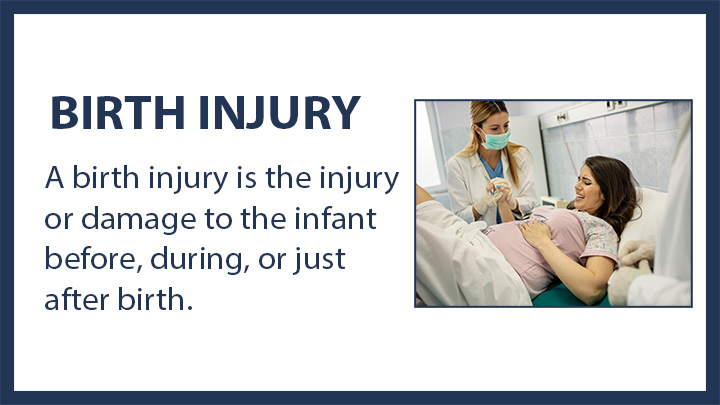
Medical providers (like doctors, nurses, and midwives) are trained to monitor and protect the baby’s health throughout the pregnancy and labor and delivery process. A certain minimum standard of care is expected of these medical providers.
Therefore, birth injury medical negligence can be described as the conduct of a medical provider that falls short of a standard of care that another similarly qualified medical professional in similar circumstances would have followed in order to protect the baby from a foreseeable risk of birth injury or birth complication.
Common examples of medical negligence that results in a birth injury include misdiagnosis, delayed diagnosis, failure to diagnose, medication errors, surgical errors, failure to provide timely or correct treatment, failure to recognize signs of fetal distress or a failure to perform an emergency cesarean section when required.
Medical negligence can occur during the labor process, at the time of delivery or even during the period of time shortly after delivery (neonatal period).
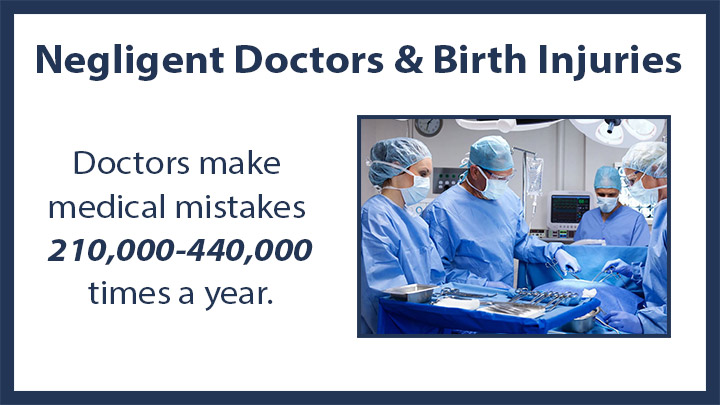
Proving Birth Injury Negligence?
To prove birth injury negligence and successfully pursue a medical malpractice claim, the following legal elements must be established:
Duty
When an expectant mother or child is being treated by their obstetrician or nurses and other hospital personnel a duty of care is established. The law states that these medical providers owe a duty to comply with the “standard of care” to the expectant mother and child (both before and after birth).
Standard of Care
Standard of care is the primary legal element in a birth injury negligence claim. When you seek medical care and medical services during pregnancy, labor and delivery, the doctors and nurses must comply with the standard of care to you and your baby.
The level of medical care, professional skill, and diligence that a similarly qualified medical provider under similar circumstances would have exercised is defined as the “standard of care” in birth injury cases. Expert witnesses in the same field or with knowledge of the field will be required to state what the correct standard of care is under a given set of facts.
The Birth Injury attorneys at Miller Weisbrod Olesky work with expert doctors and nurses across the country in order to provide the necessary expert standard of care testimony.
Breach of Standard of Care
A breach in birth injury negligence cases occurs when a medical provider fails to meet the prevailing standard of care. The breach may constitute a failure to perform a certain medical act that was reasonably expected of them under the circumstances or committing a medical error that they were reasonably expected to avoid under the circumstances.
Some of the common examples of breach of standard of care, which may result in serious birth injuries, including HIE and cerebral palsy, include:
- Ignoring signs of birth injury risk factors
- Failure to properly diagnose the condition such as fetal distress or neonatal complications like neonatal hypoglycemia or jaundice
- Failure to properly treat the condition after diagnosis
- Failure to monitor the baby for signs of fetal distress including reading the electronic fetal monitor strips incorrectly
- Failing to respond correctly to fetal distress
- Delay in performing neonatal resuscitation
- Delay in performing a cesarean section when necessary
- Delay or failure to perform hypothermia therapy
- Improper use of medications or assisted delivery devices
- Improper administering of anesthesia
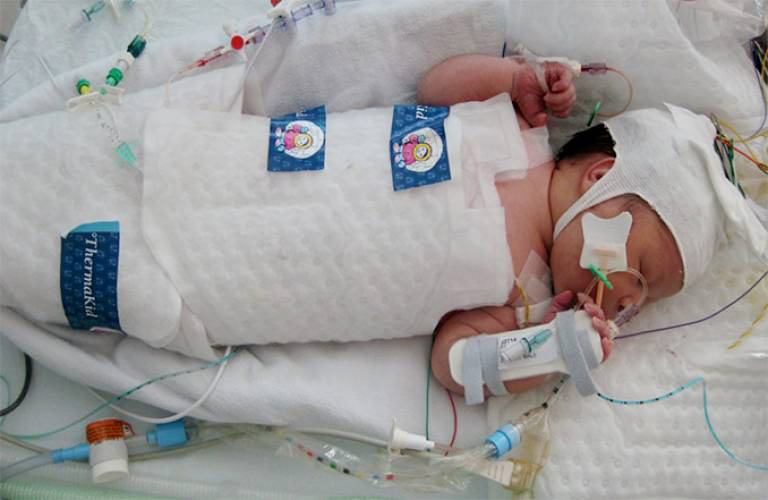
Causation and Harm
Causation in birth injury cases refers to the connection between the medical provider’s negligence (breach of standard of care) and the harm caused to your baby.
For a successful medical malpractice claim, it must be proven that medical negligence was a cause or contributing cause of your baby’s birth injury. In simpler terms, the question to be asked is: “But for” the negligence of the medical provider, would your baby have suffered birth injury or the same degree of birth injury?”
Pregnancy and Medical Negligence
At any time during pregnancy, if the medical provider fails to identify signs of birth complications or risk factors that increase the risk of birth injury, or fails to administer proper treatment, it may constitute medical negligence.
Examples of medical conditions that may contribute to birth injury if left untreated or are improperly treated include:
- maternal infections (such as Group B Strep)
- preeclampsia (maternal high blood pressure)
- gestational diabetes newborn jaundice
- hypoglycemia (low blood sugar), placenta previa (placenta covering the uterus opening)
- macrosomia (abnormally large size of the baby)
- Failure to continuously monitor the baby’s heart rate or notice other signs of fetal distress
- Waiting too long to perform an emergency cesarean section
- Failure to appropriately administer antibiotics or medications such as Oxytocin/Pitocin
- Failure to prevent or manage PROM (premature rupture of membranes)
- Improper use of tools such as forceps or vacuum extraction during an assisted delivery
- Anesthesia errors during delivery
- Failure to monitor the vital signs of the baby
- Failure to provide timely neonatal resuscitation
- Failure to diagnose or treat kernicterus (newborn jaundice)
- Failure to diagnose or treat respiratory distress syndrome in the baby
- Failure to administer therapeutic hypothermia (brain cooling therapy)
- Were there signs of a birth injury during the pregnancy, labor, and delivery process, or presence of risk factors, which were either not recognized or properly treated?
- Did the medical team fail to order a series of tests to diagnose a suspected birth complication in a timely manner?
- Was the decision to perform a cesarean delivery delayed?
- During the labor and delivery, were there clear indications that their baby was suffering from fetal distress, but appropriate actions were not taken by the obstetrician or nurses?
- Did the neonatal resuscitation team delay in providing important breathing support after birth?
- Were serious neonatal conditions like hypoglycemia or jaundice missed or treated incorrectly?
- Should brain cooling (also called “hypothermia therapy”) have been offered to your baby, but the doctors and nurses failed to perform the appropriate tests or ignored the results of the tests?
Labor/Delivery and Medical Negligence
A wide range of medical errors may occur at the stage of labor or delivery, which can result in birth injury. Severe fetal hypoxia (oxygen deprivation), which may cause hypoxic-ischemic encephalopathy and eventually lead to cerebral palsy is a serious birth injury risk during labor and delivery.
Examples of negligence during labor and delivery include:
Neonatal Medical Negligence
Sometimes medical providers may act negligently even after the baby has been delivered. Examples include:
Cerebral Palsy and Medical Negligence
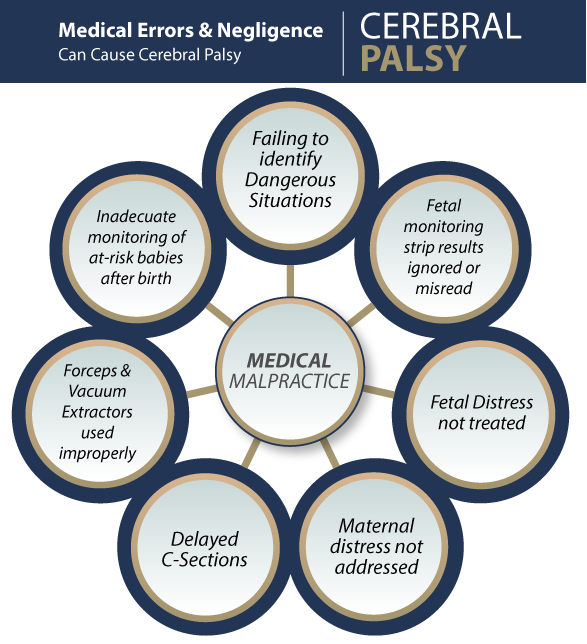
Before, during or just after delivery, if the baby’s brain is deprived of oxygen for a prolonged time period, it can cause permanent brain damage called hypoxic-ischemic encephalopathy (HIE). Severe cases of HIE may lead to cerebral palsy, which includes various neurological disorders depending on the area of the baby’s brain that has suffered damage.
Cerebral palsy affects the baby’s motor and developmental skills. In many cases, cerebral palsy is preventable if medical providers exercise the prevailing standard of care. Unfortunately, medical negligence continues to occur before, during and after the birthing process, leading to a high incidence of cerebral palsy.
Despite significant advancements in medical science, according to the CDC, the prevalence of cerebral palsy has not reduced over the years.
Is Your Child’s Birth Injury the Result of Medical Malpractice?
Parents whose children suffer from birth injuries or birth complications want and deserve answers as to cause of their child’s injury and whether mistakes by the doctors and nurses contributed to the injury.
The confident birth injury lawyers at Miller Weisbrod Olesky, who have been through the legal minefields before, will help you determine if mistakes of the medical providers caused a birth injury to your child, including Hypoxic-Ischemic Encephalopathy (HIE) or cerebral palsy.
Why Should You Choose The Birth Injury Attorneys at Miller Weisbrod Olesky?
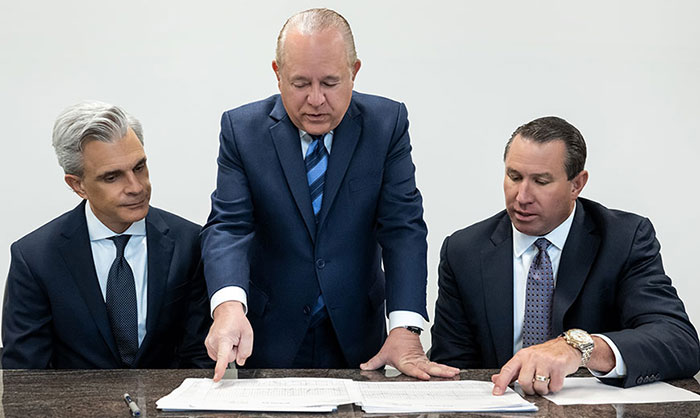
The only way to find out if you have a birth injury case is to talk to a lawyer experienced in birth injury lawsuits. It’s not uncommon that a birth related complication results in a preventable birth injury, including cerebral palsy, but it takes a detailed expert review by a birth injury attorney of the medical records from your child’s birth to determine if the birth injury was the result of medical malpractice.
Dedicated Birth Injury Malpractice Team
Miller Weisbrod Olesky's experienced birth injury attorneys have represented families all over the United States in their time of need after a birth injury. We use our experience and expertise to obtain you and your child a medical malpractice settlement that will help provide specialized medical therapy to maximize the quality of life and independence of your child throughout their life.
Sometimes families are reluctant to contact a medical malpractice lawyer. It’s also not uncommon for parents to feel overwhelmed by the responsibilities they encounter in caring for their injured child and worried that they will not be able to help out in a lawsuit involving their child’s birth injury.
Our birth injury attorneys and nursing staff will address these hesitations and concerns, so you can focus on your child and maximizing their care.
Registered Nurses and Nurse-Attorney Advocates Team

Most birth injury law firms will employ one or two nurses to assist the review of cases and medical research. But Miller Weisbrod Olesky offers an unmatched number of nurses and nurse-attorney employees support to both the birth injury attorneys and our clients.
Our team of registered nursing staff and nurse-attorneys bring a deep level of medical and personal insight to every client’s case. Our nursing team includes both an experienced labor and delivery nurse as well as an ICU nurse. Working closely with the rest of the team, they investigate the reasons behind a birth injury and how medical professionals breached their standard of care.
On-Site Medical Records and Medical Expert Team
Our medical records team gather medical records to determine what happened before, during, and after your delivery. We call in skilled medical experts who review your records and let us know if they think medical errors could have caused your child’s injuries.
If we feel medical negligence caused or contributed to your child’s injuries, we meet with you to discuss how you can receive compensation from the medical professionals who made the errors. Our birth injury attorneys have recovered millions of dollars in settlements for families of children that have suffered a birth injury.
We consult with experienced medical experts like pediatric neurologists, radiologists, and neonatologists. They will review your records to determine whether medical errors could have contributed to your newborn's HIE injury. If we make a recovery, we will move forward with an official HIE birth injury medical malpractice lawsuit.
At no point will you need to pay any fees during the legal intake or litigation process. Our dedicated nursing and medical research division will conduct a comprehensive review of your case for free.
Our contingency fee policy means that we only charge attorney’s fees on cases we win. You will never have to pay out of pocket; we charge a pre-agreed fee outlined in our attorney-client retainer contract. We do not take on any birth injury cases unless we fully know we will win.
Miller Weisbrod Olesky handles birth injury medical malpractice cases throughout the United States. We also have experience helping families living in Texas, Oklahoma, Arkansas, Missouri, Colorado, Alabama, Georgia, Pennsylvania, Ohio, Illinois, Iowa, New Mexico, Arizona, Nevada, and Washington State. You can contact our office toll-free at (888) 987-0005. Additionally, you can schedule a free consultation by filling out our online request form.
National Birth Injury Law
Our National Birth Injury Attorneys, nurses, and support staff understand that parents of children with birth injuries feel overwhelmed. So, every client has the attention and support of a team of trained, compassionate professionals. But we don’t just offer compassion.
We offer a process to help you discover whether your child’s birth injury, HIE, cerebral palsy or brain injury at birth was caused by medical malpractice.
Call our offices today at (888) 987-0005 for experienced assistance in a free consultation.
Quick Links
Testimonials
- Lyric C. I feel like our voice was heard in a sense of what can possibly go wrong in a delivery and finding us answers. I feel with our settlement, we are now in a comfortable position to provide for our son.
- Lyssa L. They are not just people that say “hey let's get you money and let's go” The law firm was very thorough with us. It was awesome. I don't want to cry, because I think about and it's amazing that they were able to help me and that we were able to help my son and get the story out there.
- Jay C. Throughout the process, one thing was clear to us, the ultimate interest of our child was the utmost concern of Max and his team and as parents navigating a situation like that, that was refreshing to know we had them firmly on our side. I highly recommend them.
Popular Cities
- ★ Dallas Birth Injury
- ★ Houston Birth Injury
- ★ Atlanta Birth Injury
- ★ Chicago Birth Injury
- ★ Philadelphia Birth Injury
Locations
★ Dallas
11551 Forest Central Drive, Ste. 300
Dallas, TX 75243
★ Houston
12929 Gulf Freeway, Ste. 111
Houston, TX 77034