Physical Developmental Milestones
Delayed Physical Milestones

Watching your baby grow up and learn new skills is one of the greatest pleasures of parenthood. Many new mothers and fathers eagerly await the day their child stands up and takes their first steps.
These kinds of physical developmental milestones are more than just sentimental moments for parents. They are reassuring indicators that your child is progressing as expected for their age. Delayed physical milestones can be a sign that something is wrong.
Babies who suffer from birth injuries often have complications that affect their movement and growth. Neonatal brain injuries like hypoxic ischemic encephalopathy (HIE), periventricular leukomalacia (PVL), and intracranial hemorrhages often have the most devastating effects.
Brain damage at birth can destroy the critical neural pathways responsible for motor function and muscle movement. This can lead to lifelong conditions like cerebral palsy, which drastically alters a child’s growth and limits their physical capabilities.
When a baby’s birth injuries stunt their growth during childhood, it’s important to know how and why the injury occurred. If their injury was the result of preventable errors in the delivery room, your family may be entitled to compensation.
If you believe medical errors are to blame for your child’s physical developmental delays, consider seeking legal advice. An experienced birth injury attorney can prove the link between your child’s preventable injuries and their physical developmental delays.
Reach Out to Our Developmental Delays Attorneys Today
A child’s physical disabilities can set them behind on important developmental milestones. If their disabilities are because of preventable injuries at birth, your family may be able to recover financial compensation.
This compensation will go directly toward medical treatments and therapies that can improve your child’s quality of life. We believe that the ones covering these expenses shouldn’t be families, but rather negligent medical providers responsible for the injury.
Free Legal Consultation
Birth Injury Lawyers
(888) 987-0005Our Birth Injury Lawyers are available to meet you in your home or the hospital.
Over the last four decades, Miller Weisbrod Olesky's national birth injury legal team has recovered over $1 billion for medical malpractice victims. We have a large network of medical experts and nine in-house nurses who weigh in on each and every case.
Our team-based approach to our cases gives us an edge over other national birth injury firms. When clients come to us, we welcome them with not just an attorney, but our entire team. Each case has an assigned nursing-patient advocate available to update families and assess the child’s current needs.
Miller Weisbrod Olesky understands that your child’s needs cannot simply go on pause while your case is ongoing. That’s why we use our resources and connections to get them the best possible care. Your team is available to help you locate specialists, schedule appointments, obtain medical documentation, provide transportation lodging, and more.
Our national birth injury lawyers help families on a contingency fee basis. This means you only pay fees after we secure a settlement for your child. You won’t have to pay anything during the litigation process, and you’ll pay nothing at all if we don’t win. We only receive payment once you do.
Call today to speak with an attorney or one of our nine in-house nurses and schedule a free legal consultation. One conversation with an experienced birth injury lawyer can bring your child closer to getting the care they deserve.

Recent Birth Injury Settlement:
After doctors failed to monitor a laboring mother’s blood pressure, her child experienced an HIE brain injury at birth. The damage led to significant developmental delays and impairments that followed them into early childhood.
Our specialized legal and medical division recovered $13,750,000 to help the family afford life changing developmental therapy.
What Are Developmental Motor Skills?

Motor Skills refer to the ability to perform actions and body movements that require muscle coordination and neural control.
We use our motor skills to complete large actions like sitting up, crawling, standing, walking, running and jumping. But we also use them for actions as small as gripping a pencil or lifting up your pinky finger.
Motor skills serve as the foundation for almost all of our daily activities. We begin developing them at birth and continue to refine them throughout the rest of our lives.
How Do Babies Develop Motor Function?
At birth, a newborn’s movements are all reflexes, or innate, involuntary movements and reactions to the world around them. Reflexes like rooting, sucking, and startling are part of natural human survival instincts. Doctors and delivery nurses will check each baby’s reflexes at birth when calculating their APGAR score.
In the first few months of life, the newborn will slowly gain head control. They will be able to track movement with their eyes and lift their head slowly while on their stomach. They will slowly build muscle strength in the neck and upper torso to achieve more complex movements like sitting up and rolling over.
A baby’s muscular control slowly moves down through the torso and lower back to the legs and feet. This is why the sequence of learning to roll over, crawl, and walk happens in the order that it does.
Gross Motor Skills vs. Fine Motor Skills
Gross Motor Skills
Gross motor skills require coordination between large muscle groups to perform large movements like walking, running, twisting, or jumping. These skills are essential for building strength, balancing, and navigating the world around us.
Fine Motor Skills
Fine motor skills require coordination between small muscle groups to achieve precise movements like writing, buttoning, or opening a jar. These refined skills rely more on dexterity, hand-eye coordination, and muscle control.
Children will generally develop their gross motor skills first. However, both types of motor function are important to development and achieving independence. Many physical developmental milestones in the early childhood years will be a mix of gross and fine motor skills.
What Are Important Physical Developmental Milestones?
There are several key physical developmental milestones parents can expect their children to reach as they grow up. Pediatricians and childcare experts encourage all parents to watch for these milestones and new skills.
Noticing when your baby is missing milestones can be one of the first signs of having a disability. It’s important for parents and specialists to recognize the signs early so they can properly intervene and help the child.
What Are Infant Physical Milestones?

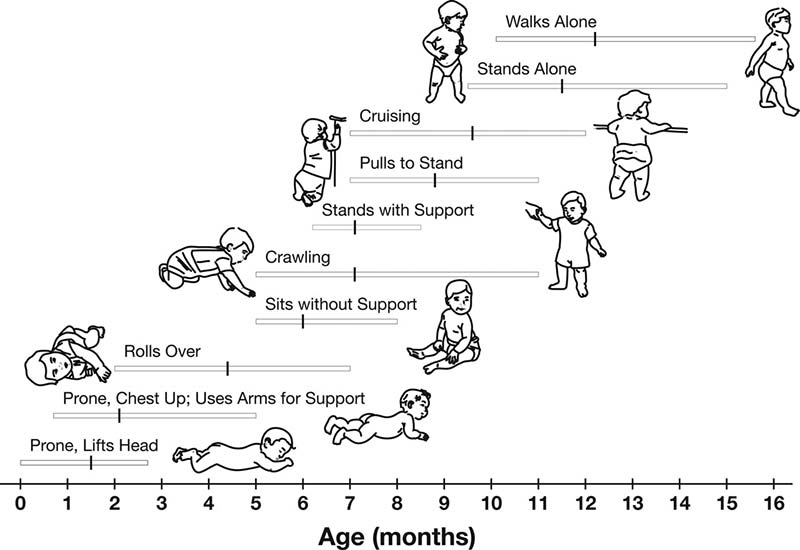
Many babies develop a surprising number of motor skills within their first year of life. In this time, their movements transition from spontaneous reflexes to coordinated, voluntary movements. By their first birthday, some babies may even take their first steps. However, it’s perfectly normal for children to take their first steps anywhere between 9 and 15 months.
The following checklists show expected physical developmental milestones ranging from zero months to the baby’s first birthday.
What Are Toddler Physical Milestones?

At around 13 to 15 months, your baby will have likely taken their first independent steps. While they may still stumble down at times, this huge leap propels them toward fully walking by around 18 months. Your child’s fine motor skills will also begin rapidly improving during this time. By 24 months, they should be able to fully hold objects like toys, crayons, and eating utensils.
The following checklists show expected physical developmental milestones during the baby’s toddler years (ages 1 to 3):
What Are Early Childhood Physical Milestones?

Children between ages 3-5 are typically full of energy. At this age, most will be able to play outdoor games with playground equipment like balls, slides, and jungle gyms. A child at 5 years old should be able to perform dynamic movements like skipping, jumping, hopping, or climbing.
The following checklists show expected physical developmental milestones during the early childhood years (ages 3 to 5):
What Birth Injuries Can Delay Physical Milestones?

Certain birth injuries can have lasting effects on a baby’s development, preventing them from reaching traditional physical developmental milestones.
Birth Asphyxia

Oxygen deprivation during labor (birth asphyxia) is particularly dangerous because it can quickly kill off the baby’s brain cells. Babies who suffer brain injuries from hypoxia caused by oxygen deprivation often endure varying degrees of physical impairment.
The most common and devastating injuries after a baby experiences birth asphyxia are hypoxic ischemic encephalopathy (HIE) and cerebral palsy. Both of these conditions often come with issues controlling muscle movement.
Spinal Cord Injuries

The spinal cord is a critical body part responsible for communicating information between the brain and the muscles. It carries motor signals through neurons to different muscle groups to carry out actions.
Spinal cord injuries at birth can limit movement or even cause full paralysis or partial paralysis. Additional complications can include muscle spasms, particularly in the neck (a complication called cervical dystonia).
Brachial Plexus Injuries
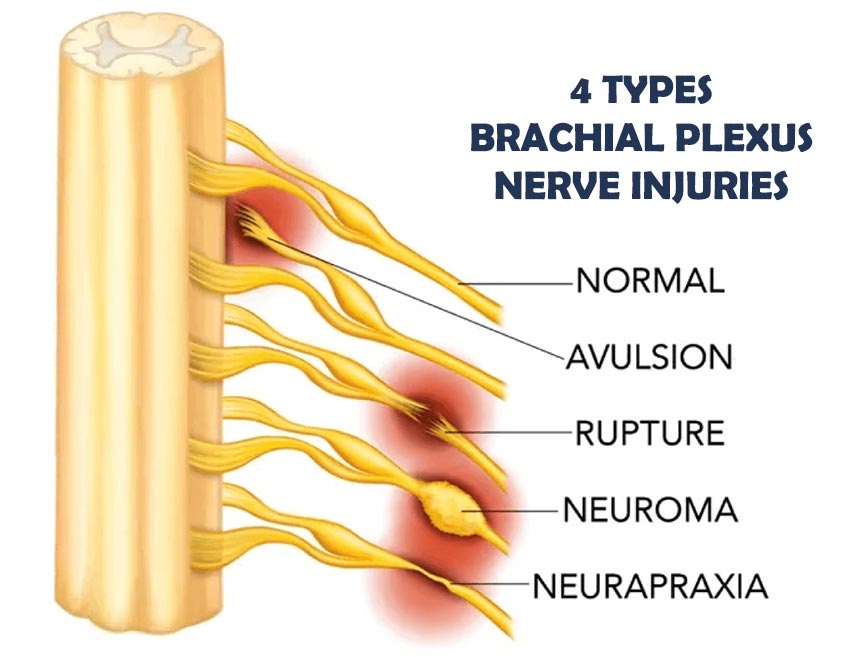
The brachial plexus group of nerves in the neck are responsible for controlling movements in the shoulders, arms, and hands. An injury to these nerves is usually the result of labor complications like shoulder dystocia or breech delivery. It can cause paralyzing conditions like Erb’s palsy, klumpke’s palsy, or cervical dystonia. A brachial plexus injury may also cause chronic numbness or muscle weakness in the affected limb.
Other Birth-Related Head Injuries
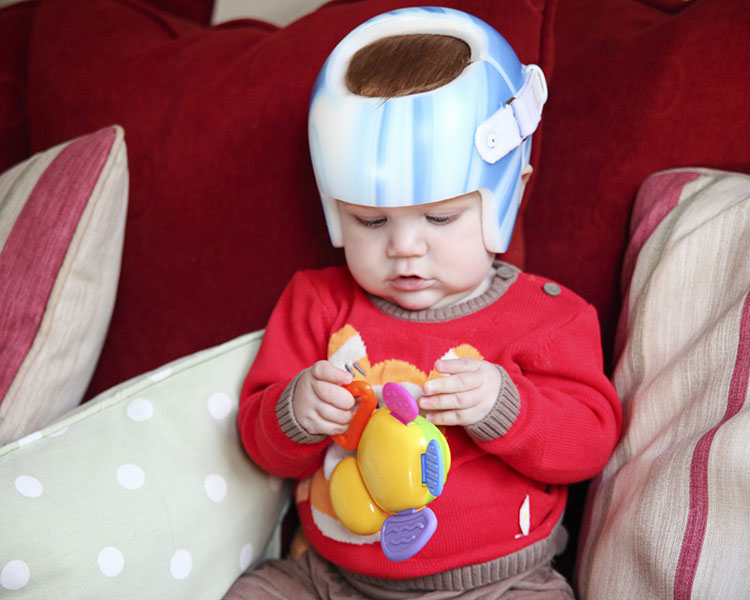
Head injuries can occur during birth with difficult deliveries or if doctors apply excessive force with forceps and vacuum extractors. Injuries like skull fractures, brain bleeds, and excessive cerebral compression can contribute to permanent brain damage at birth.
If a baby’s head injuries disrupt brain function or cause irreparable damage, it can have effects on their physical development. Brain injuries can often delay physical developmental milestones like walking, balancing, and traversing uneven surfaces.
How to Help Children with Physical Developmental Delays?

Most children’s physical developmental delays will appear before 18 months. You may notice by then your baby hasn’t started walking or that they favor using one side of their body. When these kinds of delays or impairments become evident, early intervention is crucial.
Getting early treatment while your child is still young can help them avoid long-term disabilities and further delays.
Physical Therapy

Physical therapy gives children an opportunity to practice targeted exercises and movements with a trained specialist. By performing specific movements and strengthening their related muscle groups, children with disabilities can improve flexibility and range of motion.
Starting physical therapy from an early age is the most beneficial. This is because it gives children’s brains more time to form the neural connections required for performing each movement.
Occupational Therapy

Occupational therapy is an opportunity for children to practice activities that engage their fine motor skills with small, precise movements. Common exercises include drawing, handwriting, holding utensils, buttoning clothes, using zippers, and playing games with small pieces.
Occupational therapy can help children with developmental delays become more comfortable performing the everyday tasks and activities in their life.
Assistive Equipment & Devices
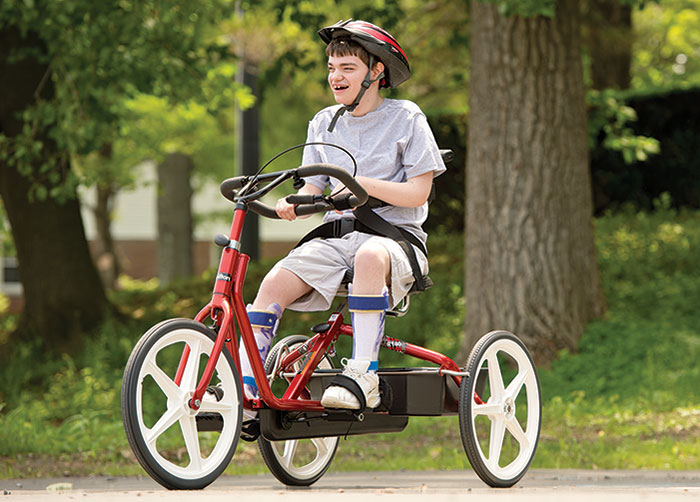
When a child’s physical disabilities are too profound to treat with therapy, they may benefit from assistive equipment and devices.
Traditional equipment like canes, wheelchairs, and walkers can help them overcome struggles with walking and mobility. But other devices, like adaptive tricycles, toys, beds, toilets, and chairs, can also make everyday movements much easier.
Medical Procedures
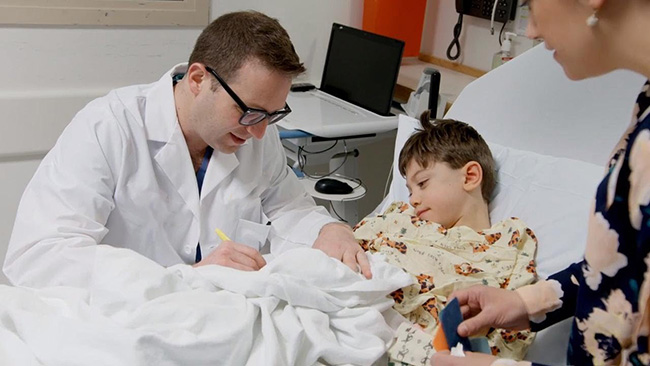
Children with conditions like cerebral palsy often experience stunted physical development and related complications like hip subluxation and joint pain.
Medical procedures like hip muscle release surgery, selective dorsal rhizotomy, and osteotomy surgery can relieve pain and improve mobility.
Did Medical Malpractice Cause My Child’s Motor Delays?

It can be hard for parents to accept when their child is falling behind on physical developmental milestones. They may take it as a personal failure or reflection of their parenting style. But in reality, these developmental delays can stem from preventable birth injuries that parents had no part in causing.
Examples of Medical Mistakes That Lead to Motor Delays
Miller Weisbrod Olesky's national birth injury lawyers have witnessed hundreds of cases where a child’s developmental delays began with mistakes during labor. Examples of medical malpractice that can cause neurological brain injuries and lead to physical disabilities include:
- Failing to treat pregnancy complications like preeclampsia or gestational diabetes, which can increase the risk for birth complications.
- Missing or failing to treat a maternal infection that develops into a neonatal infection.
- Failing to notice signs of fetal oxygen deprivation, such as concerning heart rate patterns on the fetal monitor.
- Needlessly delaying an emergency C-section delivery and prolonging a child’s hypoxia or anoxia.
- Misusing delivery instruments like forceps and vacuum extractors.
- Applying excessive force in cases of shoulder dystocia.
If you believe your child is missing physical developmental milestones because of preventable injuries at birth, our attorneys can help. Our top rated birth injury legal team can investigate the facts and assess the strength of your medical malpractice claim.
What Is the Statute of Limitations in a Birth Injury Case?

A statute of limitations (SOL) is a law that sets a time limit on how long an injured person has to file a lawsuit after an accident. It is essential to understand that statutes of limitations vary based on the case and the state where you file. For instance, the deadline for birth injury claims is typically different from other claims, such as injury to private property.
Generally, the clock starts ticking on the date the injury occurred. However, there are exceptions to this rule. In some cases, the statute of limitations starts when a person discovers or reasonably should have discovered an injury. When dealing with government agencies, SOLs can become even more complex.
For example, special rules may apply if you are pursuing a claim against:
- A federal employee
- Someone employed by a military hospital, Veterans Administration facility, or a federally funded medical entity
In these cases, you may need to file a birth injury claim under the Federal Tort Claims Act (FTCA). In FTCA cases, claimants must go through certain administrative procedures before filing a lawsuit. In some states, you may have less time to give notice if:
- The negligent party was a local or state government hospital
- The doctors and medical providers are employees of a governmental entity
If you file your case outside of the statute of limitations, the court will typically dismiss it. This means you will not be eligible to recover compensation for you or your child’s injuries.
Determining when a statute of limitations begins on your case can be tricky. If you are considering pursuing compensation for a birth injury, contact an attorney as soon as possible.
How Can Our Birth Injury Attorneys Help?
Each baby develops at their own pace, but missing important milestones can be the first sign of larger underlying issues.
Our national birth injury lawyers can find and prove the link between your baby’s birth injuries and their physical developmental delays. We will fight on your family’s behalf to hold negligent healthcare providers accountable when they commit documented medical malpractice.
When we win, we can recover life-changing compensation that will help your family be able to afford:
- Medical treatments and therapies like physical therapy and occupational therapy
- Assistive equipment like wheelchairs, modified vehicles, and home modifications
- Procedures like hip muscle release surgery or osteotomy to improve flexibility and ease chronic pain
- In-home caregivers and medical attendants
Our Process
Our team of specialized birth injury attorneys, in-house nurses, and paraprofessionals is here to help your family seek justice. We use a comprehensive medical case review process to assess claims and hold negligent parties responsible.
We’ll begin by learning more about your delivery by gathering records to determine what happened before, during and after. We will determine whether healthcare professionals properly responded to your labor and delivery complications like oxygen deprivation or shoulder dystocia.
We will consult with our network of medical experts who review your records and provide their professional opinion. If we feel medical negligence caused your baby’s developmental delays, then we will meet with you to discuss further. If you decide to hire us, we will waste no time filing your claim and building your baby’s case.
You will not have to pay upfront for services at any point in our legal intake process. The medical review of your case and the consultation are free. We will only charge a pre-agreed percentage outlined in the client-attorney retainer contract. We will never charge families unless we recover compensation for their child.
The sooner you reach out, the sooner we can investigate your case and gather evidence to support your claim. You can contact us today to schedule your free consultation by calling our toll-free line at (888) 987-0005. We are also reachable through filling out our online consultation form.
National Birth Injury Law
Our National Birth Injury Attorneys, nurses, and support staff understand that parents of children with birth injuries feel overwhelmed. So, every client has the attention and support of a team of trained, compassionate professionals. But we don’t just offer compassion.
We offer a process to help you discover whether your child’s birth injury, HIE, cerebral palsy or brain injury at birth was caused by medical malpractice.
Call our offices today at (888) 987-0005 for experienced assistance in a free consultation.
Quick Links
Testimonials
- Lyric C. I feel like our voice was heard in a sense of what can possibly go wrong in a delivery and finding us answers. I feel with our settlement, we are now in a comfortable position to provide for our son.
- Lyssa L. They are not just people that say “hey let's get you money and let's go” The law firm was very thorough with us. It was awesome. I don't want to cry, because I think about and it's amazing that they were able to help me and that we were able to help my son and get the story out there.
- Jay C. Throughout the process, one thing was clear to us, the ultimate interest of our child was the utmost concern of Max and his team and as parents navigating a situation like that, that was refreshing to know we had them firmly on our side. I highly recommend them.
Popular Cities
- ★ Dallas Birth Injury
- ★ Houston Birth Injury
- ★ Atlanta Birth Injury
- ★ Chicago Birth Injury
- ★ Philadelphia Birth Injury
Locations
★ Dallas
11551 Forest Central Drive, Ste. 300
Dallas, TX 75243
★ Houston
12929 Gulf Freeway, Ste. 111
Houston, TX 77034