Cerebral Palsy And Learning Disabilities
Does Cerebral Palsy Cause Learning Disabilities?
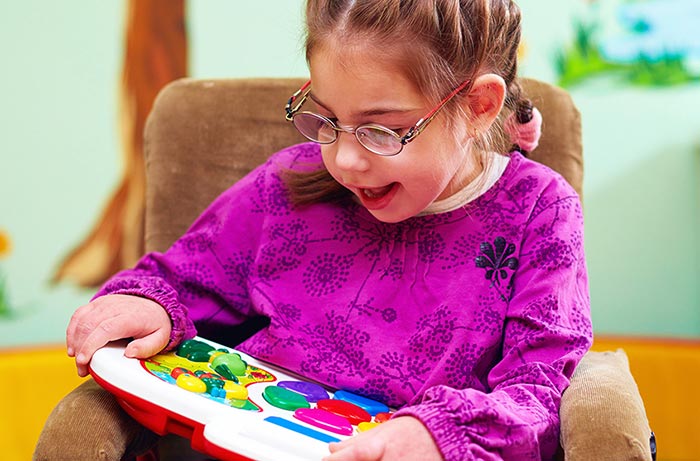
Cerebral palsy is a condition that primarily affects gross motor skills. It is common, however, for conditions like learning disabilities to accompany a CP diagnosis. About 30 to 40 percent of children with cerebral palsy have varying degrees of cognitive impairments that may affect a child’s ability to learn.
Learning disabilities affect a child’s ability to think, learn, process, and apply information. Difficulty with spelling, reading, math, memory, direction-following, and attention span are possible symptoms of a child’s learning disability.
Not every child with cerebral palsy will experience academic or cognitive delays. Sometimes, a physical impairment can mask a child’s intelligence, which is usually measured through IQ and tests of fluid reasoning.
The type of brain injury and the extent of brain damage are key factors that affect a child’s capability to learn. Other factors, such as behavioral difficulties or a limited access to high-quality, specialized education, can create additional barriers in learning.
How Does Cerebral Palsy Affect the Brain?
All cases of cerebral palsy stem from either underdeveloped brains or brain injuries. These injuries often happen at birth, but brain damage can occur during early childhood as well.
Severe neonatal infections like meningitis or a high fever during childhood years can damage the baby’s developing brain. This may happen at birth as the result of an uncaught or insufficiently treated maternal infection transferring to the baby.
Head injuries at birth are another common cause of cerebral palsy. Injuries like an intracranial hemorrhage (brain bleed) and other outcomes of head trauma can cause irreversible injury to the child’s brain. Other common causes at birth include neonatal strokes, seizures, and prolonged oxygen deprivation (birth asphyxia) during labor and delivery.
Brain damage that leads to cerebral palsy can affect areas of the brain responsible for cognitive functioning. The severity and location of the brain damage impacts the degree of cognitive impairment and disordered learning.
Some of the brain’s functions that may be affected by brain damage include:
- Attention span
- Decision-making
- Comprehension
- Language skills
- Learning
- Memory
- Processing emotions and feelings
- Problem-solving
- Recognition
- Speech proficiency
Some cerebral palsy cases stem from genetic mutations and other factors like prematurity. These factors fall outside of a medical professional’s control. However, birth injuries are a leading cause of cerebral palsy. Medical malpractice increases the risk of preventable injuries causing irreversible brain damage at birth.
The Web of Cognition, Intelligence & Learning
Determining how intelligence, cognition, and the ability to learn correlate and differ is often abstract. People spend their lives studying these concepts, and they are important to understand when discussing impairments of the mind.
Cognition describes the mental processes or actions involved in the perceiving, learning, reasoning, and understanding of the world around us. Cognitive functioning also includes awareness, judgement, intuition, memory, and language capabilities.
These processes typically allow us to learn, communicate, build relationships, achieve goals, solve problems, and more. When parts of the brain responsible for these actions are damaged, certain skills may be impaired as a result. Cognitive weaknesses may manifest through intellectual disorders and learning disabilities.
Psychologist Raymond Cattell theorized that intelligence can be defined through two concepts:
- Crystallized Intelligence: the ability to retrieve acquired knowledge and,
- Fluid Intelligence: the ability to solve problems and identify complex patterns or relationships.
Learning is the actual process of acquiring knowledge through experience and stimuli. Knowledge is generally learned through:
- Observation: watching and imitating others, and
- Association: creating connections between events that occur together in an environment and learning to associate behavior with consequence.
In short, cognition equips an individual with the ability to carry out specific mental processes. Intelligence defines the extent to which mental actions can be used to reason, apply, and understand knowledge that is learned through observation and association.
A learning disability does not necessarily affect nor define an individual’s intelligence. It simply means that their brain processes certain information differently than what is considered normal.
Sometimes, the physical impairments associated with cerebral palsy can mask a child’s breadth of cognitive ability. Individualized and adaptive testing is important in accurately determining a child’s cognitive functioning and intelligence. Understanding the extent of their abilities and disabilities can help parents, educators, and doctors create a plan for their academic career.
What Are Executive Functions?
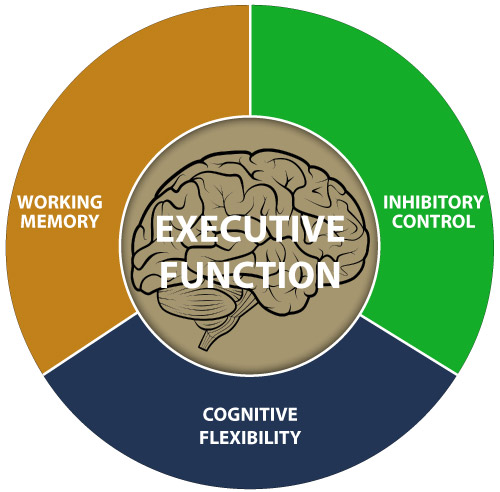
Children with cerebral palsy are often at risk of executive dysfunction that inhibits their higher-order skills. These skills help in problem solving, achieving goals, planning, and emotional regulation.
Executive functions are crucial for effective learning and information processing. These functions are typically developed and refined throughout childhood and into adulthood. The three main functions include working memory, cognitive flexibility, and inhibitory control.
Working Memory
Working memory permits us to work with stored information that is no longer perceptually present and combine it with new information. Children with CP and learning disabilities often have significant difficulties with working memory.
This function is important for literacy and mathematics skills, such as:
- Retaining letter-sound associations needed for reading tasks
- Monitoring incoming information while doing math
One study found that working memory was the greatest difficulty for children with Cerebral Palsy and learning disabilities. Testing for this function may help in determining if a child with CP has a learning disorder.
Cognitive Flexibility
Cognitive flexibility is a function that helps with adaptation to changes in one’s life or environment. Skills like multitasking, empathy, and problem solving rely on this flexibility. In an educational environment, this function is important for:
- Shifting between tasks and subjects during the day
- Learning and applying new knowledge
- Emotional regulation and social interaction
- Solving complex problems and thinking critically
Inhibition Control
This function essentially regulates impulse control. To control one’s inhibitions means to regulate thoughts, emotions, focus, and manage reactions to stimuli.
For example, school is typically an overstimulating environment. Loud conversations, complex tasks, and excess noise may inhibit someone’s ability to focus or cause them to react negatively if they experience executive dysfunction.
What Are Common Learning Disabilities Associated with Cerebral Palsy?

Although cerebral palsy is defined by a disorder of movement, damage to specific parts of the brain can cause other symptoms, including learning disabilities.
A learning disability is defined by an atypical processing of information that typically affects how an individual reads, writes, or does math. Learning disabilities do not affect an individual’s intelligence; rather, they affect how well certain information is processed.
In contrast, an intellectual developmental disorder (IDD) is a limitation in mental abilities that affect learning, intelligence, and everyday skills. Between 40 and 50 percent of children with cerebral palsy have an intellectual disorder.
According to Developmental Medicine & Child Neurology, children with cerebral palsy, about 59% had reading, writing, or mathematics disorders. Common learning disabilities include:

Dyslexia
Dyslexia affects the ability to read, write, and spell correctly, including difficulties with word reading accuracy, reading speed or fluency, and reading comprehension.
When certain parts of the brain responsible for language are affected by a brain injury, these literacy skills are more likely to be impaired. Children with cerebral palsy often exhibit signs of literacy delays, even before reading and writing skills are taught.
Working memory impairment, vision delays, and attention deficits may also contribute to learning disabilities like dyslexia. Cortical Visual Impairment (CVI) can impact the ability to recognize letters and apply them to reading and writing skills. With CVI, the brain is unable to process visual information despite the eyes being intact and healthy.
Additionally, children with learning disabilities and cerebral palsy often have an impaired phonological awareness that affects their literacy skills.
Phonological awareness is the ability to recognize and manipulate the sounds (phonemes) in spoken language. This skill is crucial in recognizing relationships between sounds and letters, which is needed for reading and spelling.
Dysgraphia

Cerebral palsy affects muscle movement throughout the body, including in the arms, hands, legs, feet, trunk, face, and throat. As a result, a child may be unable to walk on their own, speak clearly, or perform fine motor skills like writing.
Dysgraphia is the impairment of written expression marked by difficulties in grammar, punctuation accuracy, spelling accuracy, and clarity of written expression. Handwriting is an important skill in written performance but is often impaired by the disrupted motor skills or paralysis caused by CP.
Other skills needed to write include:
- Language processing
- Spatial perception
- Working memory (storing and manipulating mental information)
- Conceptualization
- Organization
- Orthographic coding (ability to store, recall, and form letters, symbols, and numbers)
Dysgraphia differs from dyslexia, but they often occur together and have overlapping symptoms. Dysgraphia is distinguished by the difficulty of physically writing, while dyslexia is primarily marked by difficulty in reading.
Depending on your child’s abilities, a team of specialists and educational interventions may help manage dysgraphia. This disability typically requires modified testing and assistive resources, for example.
Dyscalculia

Dyscalculia is a learning disability that affects an individual’s comprehension of mathematical-related concepts. In populations of children with cerebral palsy, research found more frequent difficulties with mathematics and poorer numeracy skills.
Brain damage can affect areas of the brain used to understand numerical calculations, including:
- Short and long-term memory
- Language (word problems, mathematical symbols)
- Visual processing
- Understanding amounts and quantities
- The process of calculation
Symptoms of dyscalculia may appear in early childhood through difficulties in recognizing numbers, counting, and learning to use money, for example. However, research suggests that dyscalculia is less likely to be tested and diagnosed compared to dyslexia and dysgraphia.
This disability is typically diagnosed according to the criteria defined by the American Psychiatric Association’s Diagnostic and Statistical Manual of Mental Disorders (DSM-5). At least one of two criteria must persist for at least six months:
- Difficulty understanding number concepts, number facts or calculation.
- Difficulties with mathematical reasoning (like solving math problems).
Dyscalculia is a lifelong disorder, but certain skills and abilities can be developed to adapt through one-on-one education.
Early Signs of Learning Disabilities in Children with Cerebral Palsy
Along with learning disabilities, conditions like attention-deficit/hyperactivity disorder (ADD/ADHD) and intellectual disabilities may coexist with cerebral palsy.
Not every child with cerebral palsy will have cognitive impairments or learning disorders but monitoring their developmental milestones is crucial for early intervention. The type and severity of cerebral palsy will often impact your child’s scope of abilities, both intellectually and academically.
Early intervention and diagnosis of learning disabilities can help your child succeed within their abilities. Signs of learning disabilities may not appear until your child is older. However, certain warning flags in early childhood may expose possible delays, including:
Delayed Language and Communication Skills

Most children diagnosed with cerebral palsy have difficulty controlling the muscles in their tongue, jaw, face, head, and neck. These difficulties usually cause limitations to a child’s speech, swallowing, and chewing. Birth injury induced hearing impairments in children diagnosed with cerebral palsy may also lead to communication challenges and speech delays.
Depending on the child’s capabilities of speech, language delays may be a sign of a learning disability. These delays may appear through signs such as:
- Difficulty understanding instructions
- Trouble forming words or sounds (phonics)
- Difficulty using verbal and nonverbal communication
If your child is missing important developmental milestones for reading, writing, speaking, spelling, or counting, it may be a sign of a learning disability.
Behavioral Delays

Children with cerebral palsy are more likely to struggle with behavioral disorders compared to their non-disabled peers. Behavioral issues are often signs of learning disabilities, including hyperactivity, attention problems, or trouble following directions.
Attention Deficits
Attention-deficit and hyperactivity disorders occur in about 20 to 30 percent of children with cerebral palsy. These deficits are typically accompanied by short attention spans and executive dysfunction.
Sustained attention is a keystone of learning. Children with attention deficits typically require modified education to support their needs.
How Are Learning Disabilities Diagnosed?
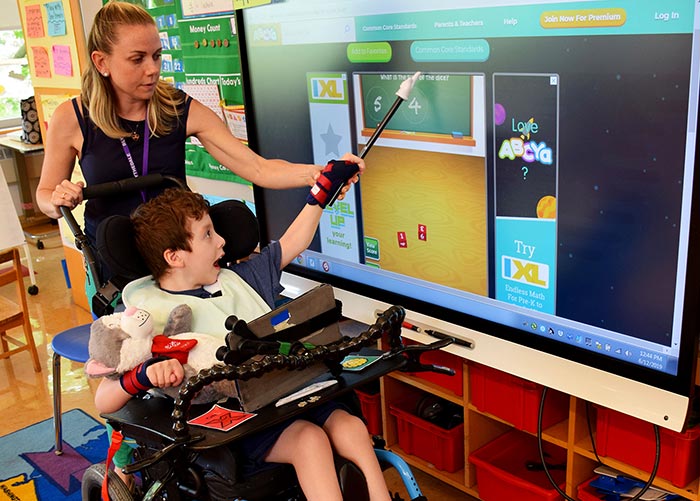
Determining if a child with cerebral palsy has a learning disability is usually not a straightforward process. Testing children with severe speech and motor impairments can result in an underestimation or assumption of their co-occurring disabilities.
Many factors, such as the degree of brain damage, can influence the level of cognitive capability and subsequent learning disability in an individual with cerebral palsy. Variability of cognitive functioning emphasizes the importance of individual assessment. Additionally, multiple learning disabilities may occur at once, so it is crucial to assess a wide range of skills.
Standardized testing of cognitive abilities is typically incompatible with cases of cerebral palsy. Many tests that measure intellectual and academic abilities require verbal responses and physical interaction with test materials. Many assessments also rely on typical vision and hearing abilities.
When working with your child’s educators and therapists, choosing tests that will accommodate your child’s physical disabilities is imperative. Assessments should be adaptive and test results must be interpreted with great care.
How Can Children with Cerebral Palsy Manage Their Learning Disabilities?
When the brain is exposed to personalized education and therapies that target a specific deficit, it can rewire itself. This is called neuroplasticity and involves the brain’s ability to adapt to challenges and absorb information.
Consistent practice using cognitive skills and early management interventions can stimulate adaptive changes in the brain. One-on-one attention is typically ideal to adapt to learning challenges, including:
Speech Therapy

Most children diagnosed with cerebral palsy have difficulty controlling the muscles in their tongue, jaw, face, head, and neck. These difficulties usually cause limitations to a child’s speech, swallowing, and chewing. Birth injury induced hearing impairments in children diagnosed with cerebral palsy may also lead to communication challenges and developmental speech delays.
Speech and language therapy can help children with cerebral palsy strengthen the muscles involved in speech and oral motor skills, improving their ability to communicate, chew, and swallow. Specialized therapy can help birth injury victims to express themselves more clearly, it enables them to have more enriching relationships with others, while giving them a greater sense of independence, confidence, and self-esteem.
Occupational Therapy
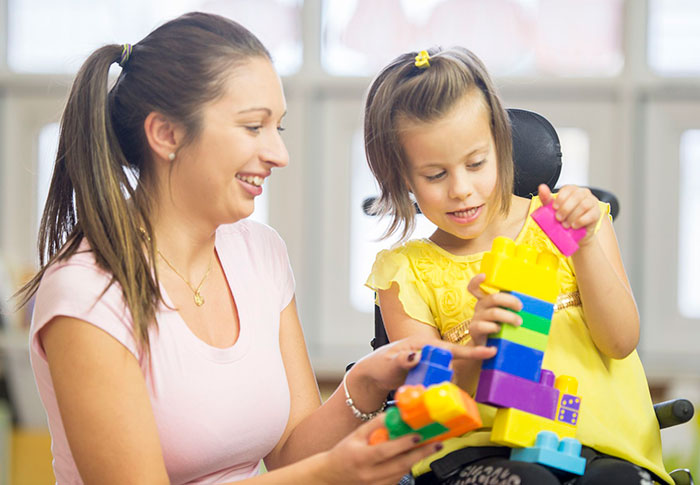
Occupational therapy for children diagnosed with cerebral palsy or other birth injuries is aimed at promoting rehabilitation and quality of life improvements by focusing on daily life activities with support from trained occupational therapists (OTs) and therapy assistants.
Occupational Therapy (OT) can address difficulties with motor function, visual/perceptual impairments, and cognitive impairment. OT can even help improve a child’s memory when targeted cognitive games and activities are included in the therapy program.
Occupational therapy not only benefits the child, but it may also have indirect benefits for the parents and family. With successful therapy, parents and other family members can achieve a great sense of satisfaction and mental peace as they witness their child improving physically, psychologically, and emotionally, and become more independent.
Augmentative Communication Devices
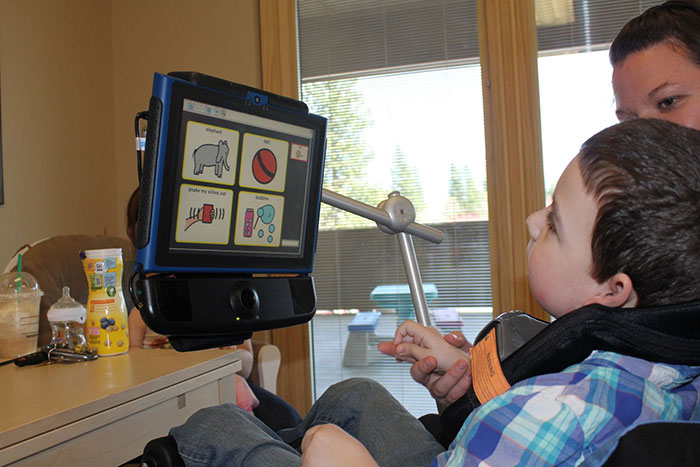
Some children with cerebral palsy have physical impairments that make communication difficult. However, cognitive impairment accompanied with speech restrictions can create an even more frustrating circumstance for the child.
Depending on the child’s strengths, professionals will use different methods to communicate. This includes using images along with words to create associations between the two.
In some cases, augmentative communication is a solution for enhancing communication skills. This can range from using speech-generating devices to using body and sign language.
Augmentative and alternative communication can be aided or unaided. Unaided AAC includes all types of non-verbal communication that takes place without the involvement of assistive devices or technology. Historical basic examples include making faces, waving hands, or using sign language.
With technological advances, Aided AAC now includes communication that involves the use of assistive equipment or technology. Examples include communication boards, speech generating devices, hearing devices, and software based devices.
Assistive Communication Devices
Cerebral Palsy Malpractice Attorneys
Our top rated cerebral palsy lawyers specialize in birth injury medical negligence. We understand how medical mistakes during delivery can cause brain injuries that permanently impact a child’s life.
If your baby’s preventable birth injuries led to a cerebral palsy diagnosis, don’t hesitate to contact our firm. We can answer difficult legal and medical questions and investigate the facts on your behalf.
Free Legal Consultation
Cerebral Palsy Lawyers
(888) 987-0005Our Cerebral Palsy Lawyers are available to meet you in your home or the hospital.
What Our Cerebral Palsy Lawyers Do
Our vast network of medical experts and in-house nursing staff and nurse-attorneys gives us the edge over our competition. When we take your case, we assign you with not just an attorney but an entire medical team. This team includes birth injury attorneys, experienced nursing advocates, and seasoned medical experts.
We understand the extensive care your child needs to assist with their cerebral palsy symptoms. Your team is available to assist with any day-to-day treatment you or your child may need. This includes assistance with obtaining medical records, scheduling doctors’ appointments, providing transportation, and any other problems that may arise.
We offer all of this on a contingency fee basis. This means you will not pay any fees until after we win your case and secure a settlement. We have an unmatched track record of birth injury results that sets us apart from other birth injury law firms.
Recent Birth Injury Settlement:Birth Injury settlement against a hospital in which nurses and physicians failed to detect a uterine rupture during delivery causing an HIE event which caused cerebral palsy. Our dedicated cerebral palsy birth injury lawyers recovered $9,200,000 for the family to help with future medical expenses and developmental therapy.

Did Medical Malpractice Cause My Child’s Cerebral Palsy?
 />
A cerebral palsy diagnosis can stem from a multitude of birth complications that interact to cause brain damage. But no matter the source, parents deserve to know when preventable medical mistakes amplify the complications of their child’s conditions.
Missing pregnancy complications, improperly monitoring fetal heart rates, or delaying C-sections can all lead to a baby’s preventable brain injury. If a family believes medical negligence worsened a child’s brain damage at birth, legal support may be an option. A cerebral palsy lawyer can review the medical records and circumstances to assess whether a claim exists.
Families who have experienced the effects of brain injuries from negligent medical care deserve to know whether they were avoidable. Our cerebral palsy attorneys specialize in birth injury medical malpractice, helping families seek compensation when negligence causes lifelong conditions.
Our team will thoroughly investigate the facts, holding responsible parties accountable by pursuing medical malpractice claims.
What Is the Statute of Limitations in a Birth Injury Lawsuit?

A statute of limitations (SOL) is a law that sets a time limit on how long an injured person has to file a lawsuit after an accident.
It is essential to understand that statutes of limitations vary based on the case and the state where you file. For instance, the deadline for birth injury claims is typically different from other claims, such as injury to private property.
Generally, the clock starts ticking on the date the injury occurred. However, there are exceptions to this rule. In some cases, the statute of limitations starts when a person discovers or reasonably should have discovered an injury. When dealing with government agencies, SOLs can become even more complex.
For example, if the party that injured you was:
- A federal employee
- Employed by a military hospital, Veterans Administration facility, or a federally funded medical entity
Birth Injury Claim Under Federal Tort Claims Act (FTCA)
You may need to file a birth injury claim under the Federal Tort Claims Act (FTCA). In FTCA cases, claimants must go through certain administrative procedures before filing a lawsuit. In some states, you may have less time to give notice if:
- The negligent party was a local or state government hospital
- The doctors and medical providers are employees of a governmental entity
If you file your case outside of the statute of limitations, the court will typically dismiss it. This means you will not be eligible to recover compensation for you or your child’s injuries.
Determining when a statute of limitations begins on your case can be tricky. Our cerebral palsy attorneys specializing in birth injuries and can tell you important cutoff dates in your state.
How Can Our Cerebral Palsy Attorneys Help?

A detailed expert review of the facts and circumstances of your pregnancy and your child's birth can reveal many things. Namely, it can determine whether a child’s cerebral palsy diagnosis and related symptoms were the result of medical malpractice.
*Not all cerebral palsy is caused by medical negligence during birth — some may stem from genetic factors, prenatal issues unrelated to care, prematurity, or unknown causes. Our National Cerebral Palsy Lawyers offer free case evaluations with a medical expert to determine whether negligence played a role in your child's birth injury.
Our Process
Our team begins by gathering information about your pregnancy by examining records to determine what happened during and after your delivery. This includes evaluating the fetal heart rate strips during labor and any action medical professionals took in the NICU.
We will call in skilled medical experts who review your records and provide insight into where medical professionals went wrong. If we feel medical negligence caused or worsened your baby’s cerebral palsy symptoms, we meet with you to discuss further.
At no point in our legal intake process will we ask you to pay anything. The medical review of your case and the consultation are free. We only receive payment once you do. The sooner you reach out, the sooner we can investigate your case and gather the evidence to support your claim.
We work on a contingency fee basis, meaning you will not pay any legal fees until we win your case. We do not pursue any medical malpractice cases unless we fully believe we can win.
Contact us today to schedule your free consultation by calling our toll-free line at (888) 987-0005. You can also reach us by filling out our online request form.
National Birth Injury Law
Our National Birth Injury Attorneys, nurses, and support staff understand that parents of children with birth injuries feel overwhelmed. So, every client has the attention and support of a team of trained, compassionate professionals. But we don’t just offer compassion.
We offer a process to help you discover whether your child’s birth injury, HIE, cerebral palsy or brain injury at birth was caused by medical malpractice.
Call our offices today at (888) 987-0005 for experienced assistance in a free consultation.
Quick Links
Testimonials
- Lyric C. I feel like our voice was heard in a sense of what can possibly go wrong in a delivery and finding us answers. I feel with our settlement, we are now in a comfortable position to provide for our son.
- Lyssa L. They are not just people that say “hey let's get you money and let's go” The law firm was very thorough with us. It was awesome. I don't want to cry, because I think about and it's amazing that they were able to help me and that we were able to help my son and get the story out there.
- Jay C. Throughout the process, one thing was clear to us, the ultimate interest of our child was the utmost concern of Max and his team and as parents navigating a situation like that, that was refreshing to know we had them firmly on our side. I highly recommend them.
Popular Cities
- ★ Dallas Birth Injury
- ★ Houston Birth Injury
- ★ Atlanta Birth Injury
- ★ Chicago Birth Injury
- ★ Philadelphia Birth Injury
Locations
★ Dallas
11551 Forest Central Drive, Ste. 300
Dallas, TX 75243
★ Houston
12929 Gulf Freeway, Ste. 111
Houston, TX 77034