Cerebral Palsy Related Conditions
What Conditions Accompany Cerebral Palsy?
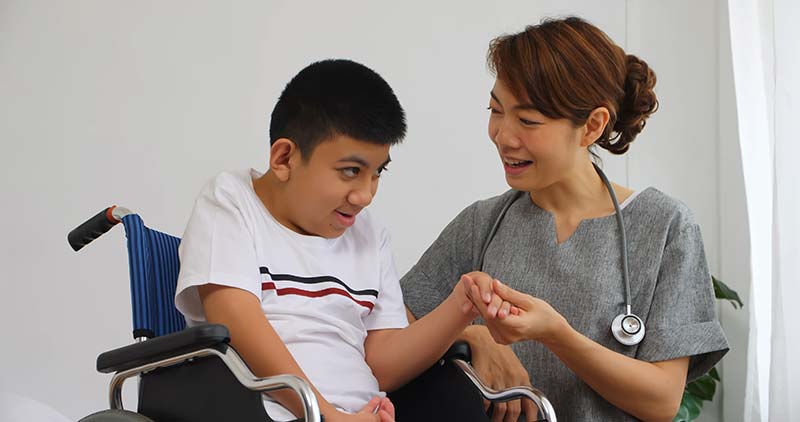
Almost all children with cerebral palsy (CP) have at least one or more conditions that affect their health. These comorbidities (conditions that coexist alongside a primary diagnosis) are classified by how they are related to the original brain injury.
For example, muscle tone dysfunction is a direct outcome of the brain damage that causes cerebral palsy. Experiencing pain is a complication, or secondary condition, in response to this primary condition. Conditions that accompany a cerebral palsy diagnosis can be classified in three ways:
- Primary Conditions: Disorders that are a direct outcome of the same brain injury that caused cerebral palsy.
- Secondary Complications: Disorders or complications developed in response to the primary conditions of cerebral palsy.
- Associative (Co-Occurring) Conditions: Disorders that are not directly related to the cerebral palsy but often co-occur.
Not every child with cerebral palsy will experience every condition listed. Additionally, this list is not exhaustive, and your child’s secondary or co-occurring condition may not be listed. It is important to discuss any concerns you have about your child’s health with their medical providers.
Unfortunately, individuals with cerebral palsy are at considerably higher risk of medical, neurological, and mental/behavioral disorders compared to the general population. The severity and location of the brain damage will typically determine subsequent complications.
What Are the Primary Conditions Caused by Cerebral Palsy?
Cerebral palsy (CP) is a group of physical and neurological disorders that permanently affect muscle movement and muscle tone. Gross motor skills like balance, the ability to walk, posture, and coordination are usually impacted by muscle disorders.
Depending on the location of brain injury and degree of brain damage, the primary conditions can affect different parts of the body at varying severities.
Movement & Muscle Tone Disorders
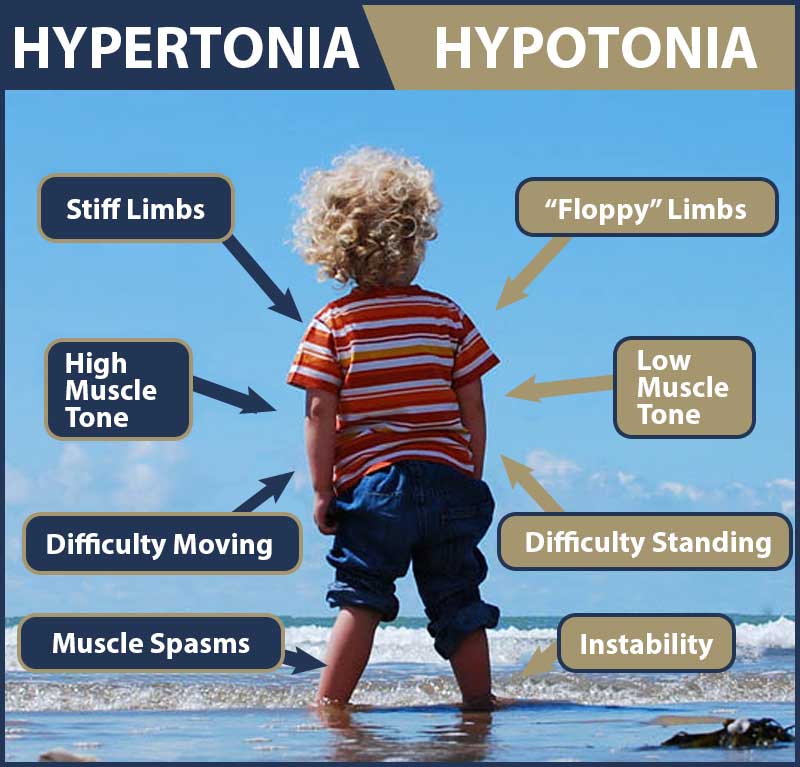
Muscles are in a constant state of tension to maintain posture, even when we don’t realize it. If you are sitting up right now reading this, your muscles are actively working to keep you sitting upright. This continuous state of tension, contraction, and resistance within the muscle fibers is our muscle tone.
One of the defining cerebral palsy symptoms is reduced control over the muscles. The brain injury that causes cerebral palsy disrupts the signals that direct the muscles on how to move.
This can create unwanted and uncontrollable changes in muscle tone, making for irregular posture and involuntary movements like kicking, flailing, and twisting.
Additionally, poor balance and coordination difficulties are common side effects of abnormal muscle tone. Muscle tone impairments in children with cerebral palsy can be defined by:
- Spasticity: Abnormal muscle movement pattern of random muscle contractions and tightening, causing stiffness and difficulty moving.
- Rigidity: Occurs when a group of muscles contracts and stay contracted for an extended period, often resulting in limited movement and pain.
- Dystonia: Marked by uncontrollable muscle contractions that cause slow, repetitive twisting movements in the hand, hands, and feet.
- Hypotonia: Excessive muscle tone that may cause a floppy or limp appearance.
Paralysis
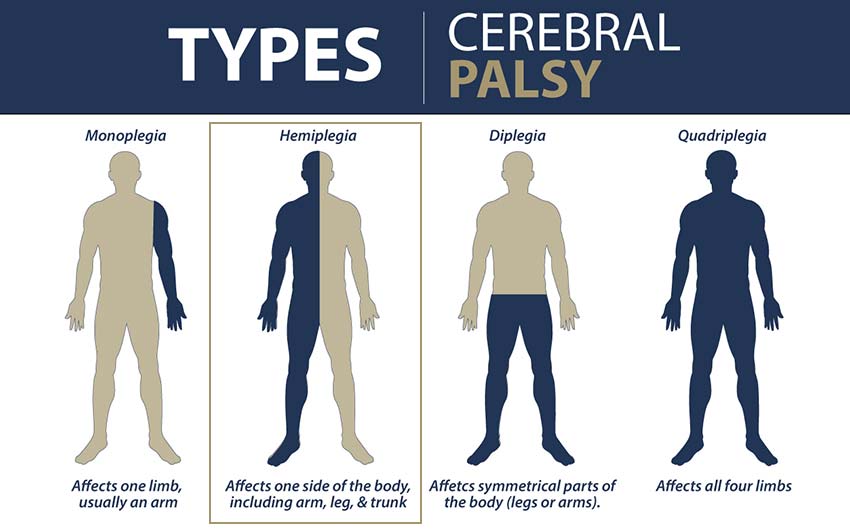
Injury to one side of the brain can cause paralysis on the opposite side of the body. This is because the nervous system pathways cross over in the brainstem. This means a child sustains brain damage to the left lobes, it will affect the right side of their body.
Cerebral palsy stems from a brain injury, many children experience some form of paralysis or loss of bodily control. This is most often a symptom for children with spastic cerebral palsy.
The three main forms of cerebral palsy paralysis include:
- Diplegia: paralysis of the legs (or sometimes the arms) caused by high muscle tone.
- Hemiplegia: paralysis that affects an entire side of the body
- Quadriplegia: the most severe form is the paralysis of all four limbs
Additional Cerebral Palsy Related Movement Disorders
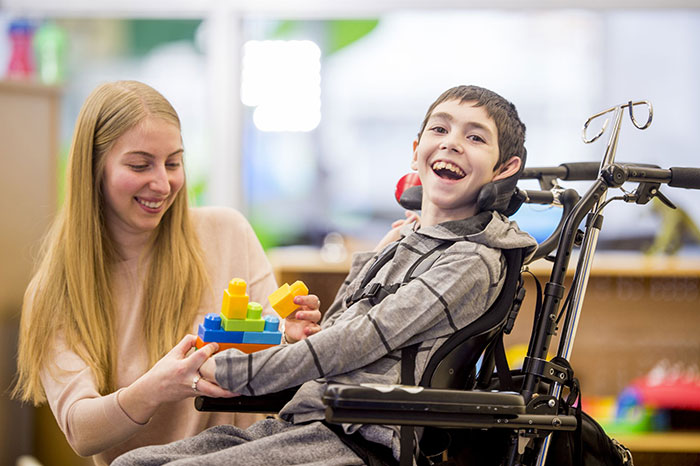
Many children with cerebral palsy experience a combination of movement disorders. These can affect multiple parts of the body, including the legs, feet, arms, throat, head, and neck. Other cerebral palsy symptoms relating to dysfunctional muscle movement include:
Delayed Reflexes
The disruption of brain signals to the body from cerebral palsy can sometimes result in a child’s delayed reflexes. Hyperreflexia refers to overresponsive bodily reflexes; this is a common symptom of other neurological conditions like amyotrophic lateral sclerosis (ALS).
Cerebral cortex damage or spinal cord injuries make it harder for the motor neurons to travel through the nervous system. This normally results in delayed reflexes to stimuli, but it can also cause reflexes without any visible trigger.
Abnormal Walking Patterns
For individuals with cerebral palsy who can walk, abnormal muscle tone may affect their gait (manner of walking). Examples of gait disturbances include:
- In-Toeing: Walking with the toes of the feet pointed inward.
- Out-Toeing: Walking with the toes of the feet pointed outward.
- Toe-Walking: Walking with an unevenly distributed amount of weight placed onto the toes.
- Limping: Walking with an unevenly distributed amount of weight placed onto one foot over the other.
- Scissor Gait: Walking with the legs crossing over each other with each step.
- Ataxic Gait: Walking with the feet placed far apart for better balance, causing staggered and clumsy movement.
- Drop Foot: The inability to lift the toes and feet high enough to clear the ground, resulting in dragging.
Many children with abnormal walking patterns enroll in physical therapy to alleviate these issues and practice better form.
Tremors
Tremors are a type of movement disorder that cause parts of the child’s body to shake uncontrollably. It is a common symptom of ataxic cerebral palsy but can occur with other types as well. Tremors can affect all parts of the body, including a child’s voice.
Some types of anti-anxiety medications like Valium (Diazepam) can momentarily alleviate tremor symptoms. However, there is currently no known cure for stopping them completely.
One of the newest treatments for cerebral palsy is injections of Botulinum toxin (Botox) to temporarily weaken muscle strain. This can successfully lessen the severity of a child’s tremors, though it is not a permanent fix.
What Are the Secondary Complications of Cerebral Palsy?
Secondary conditions and complications occur in response to the primary conditions caused by cerebral palsy. Not every child with CP will experience secondary conditions, but it is common to experience at least one of these associated complications.
Secondary and co-occurring conditions of cerebral palsy are often overlooked because CP is defined as a non-progressive neurologic disorder. Especially as your child transitions from pediatric to adult healthcare, it is important to ensure their care is continuous. Even though CP itself is non-progressive, secondary and co-occurring conditions may worsen or develop over time.
Oral Motor Impairments & Speech Disorders
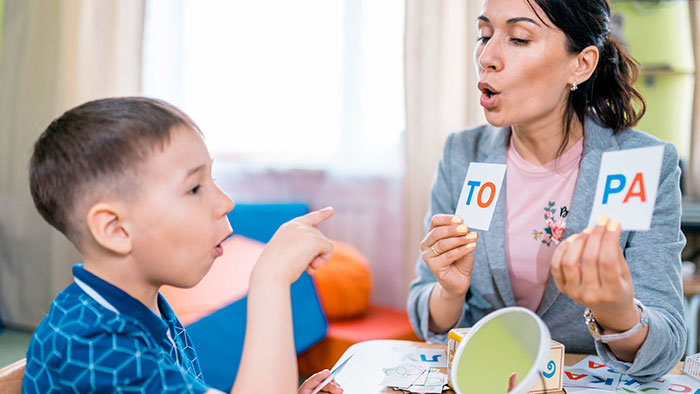
Speech impairment is one of the most common symptoms for children with cerebral palsy. This is because speech requires a complex interaction between brain signals and muscle control to produce sounds and words.
This impairment can also affect the child’s breathing and swallowing (dysphagia), putting them at risk for respiratory and feeding issues.
Some children with severe chewing and swallowing disorders may need to receive nutrients through a surgically placed gastronomy tube (G-tube). Families also may consider helping the child use alternative communication devices to facilitate speech and express specific needs.
Digestive, Malnutrition, & Urinary Conditions

Digestive issues like constipation, incontinence, and gastroesophageal reflux disease (GERD) are often associated with cerebral palsy. If a child has issues with oral motor functions, like difficulty swallowing or chewing, malnutrition can be a serious concern.
In severe cases of malnutrition and digestive issues, a feeding tube may be necessary to ensure a child is receiving proper nutrition.
To address issues like irritable bowel syndrome (IBS) or constipation, a special diet and medication may be recommended.
In a study involving 2,302 individuals with CP, malnutrition and eating complications were found in 23% of the population. Additionally, about 3% of the population were obese. Other common conditions include:
- Recurrent urinary tract infections (UTIs)
- Drooling
- Bladder and/or bowel incontinence
- Vomiting
- Pancreatitis
- Renal stones
- Overactive bladder
Pain & Poor Sleep

Pain is unfortunately a common side effect of motor dysfunction at all levels of severity. Especially in cases of speech delays or impaired cognitive skills, children with cerebral palsy may have difficulty expressing their pain.
Muscle spasms from hypertonia and musculoskeletal disorders are common sources of pain in children with CP.
Digestive issues, dental complications, and headaches are also common sources of pain and discomfort.
Pain often negatively impacts eating, learning, general well-being, and sleeping. Children with cerebral palsy are at a higher risk of developing sleep disorders. Pain and other factors that may impact sleep functioning include:
- Absence of rapid-eye movement (REM) and vision abnormalities
- Nocturnal seizures and antiepileptic medications
- Overnight feedings, medications, or repositioning
- Breathing difficulties
- Spasticity
- Cognitive impairments
Musculoskeletal Conditions
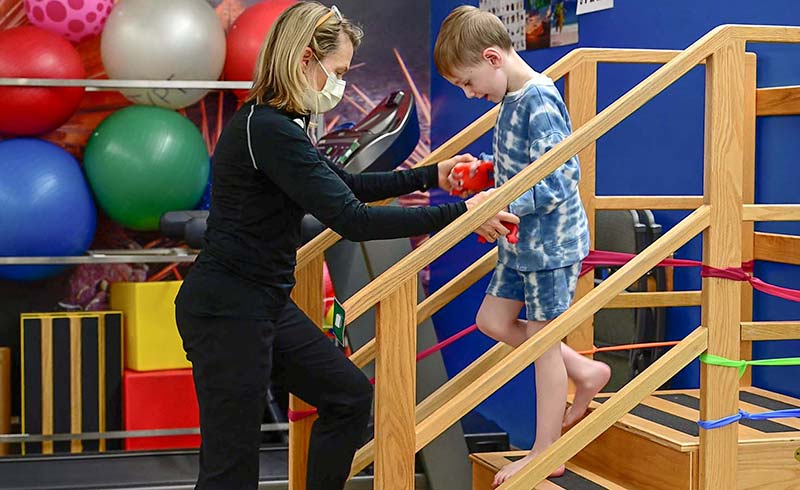
Children with cerebral palsy (CP) usually have weaker muscles that are unable to support their bones and joints sufficiently. This puts them at an increased risk for hip subluxation and/or dislocation.
Hip subluxation and dislocation often occur in children with cerebral palsy due to hypertonic (extremely tense) muscles and tendons. These muscles and tendons pull the hip away from the socket rather than keeping it in place.
“Subluxated” means that the ball is still partially in the socket but not in the center as it should. If this progresses, subluxation can cause the femur to pop completely out of the socket.
When the ball of the hip isn’t in the socket, the child will feel intense pain on their affected side. Researchers estimate that about 15-20% of children with cerebral palsy experience hip displacement that progresses to hip dislocation.
Musculoskeletal issues are often progressive due to the long-term effects of spasticity (abnormal muscle movement) on the musculoskeletal system.
Cognitive Impairment
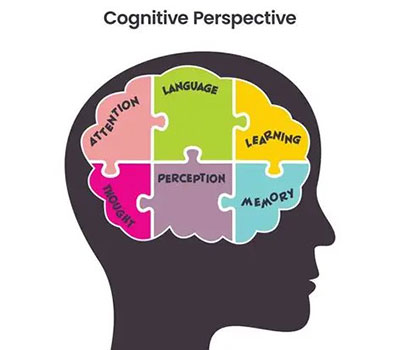
The brain damage that results from the brain injury is likely to impact cognitive function. The extent and nature of cognitive impairment depend on several factors, such as where the brain injury occurred and its severity.
Cognition is the ability to use one’s mental processes to accurately perceive, learn, reason, and understand the world around us. Cognitive functioning also includes the performance of awareness, judgement, intuition, memory, and language capabilities.
These abilities allow us to communicate, build relationships, achieve goals, solve problems, and more.
A child’s cerebral palsy (CP) may affect both their physical and cognitive functioning. However, not every child with CP will have impaired cognition.
Cognitive impairment can be difficult to detect, especially in young children with cerebral palsy. One of the best ways to identify if your child is struggling with cognitive functioning is to observe them closely.
Even infants should respond to external stimuli like sound and touch. If a child is unresponsive to external conditions, or if they fail to meet developmental milestones, a consultation with a physician is imperative.
Respiratory Issues
Recurrent and chronic lower lung infections and respiratory insufficiency are prevalent in children with cerebral palsy. Anything from coughing when drinking fluids to obstructive sleep apnea can often affect quality of life.
Research suggests that pneumonia is a leading cause for mortality among individuals with CP. Children who struggle to swallow are at a higher risk of aspiration, which can lead to lung infections like pneumonia.
The ability to cough effectively is more important than many people may realize. To clear airway secretions and prevent aspiration, a well-timed and forceful cough is necessary. In cases where this function is inhibited by lack of muscle control, an individual may have a higher risk of developing respiratory issues.
Other common respiratory issues associated with cerebral palsy include:
- Malnutrition causing respiratory muscle wasting
- Obstructive sleep apnea syndrome (OSAS)
- Bronchitis
- Asthma
What Are the Co-Occurring Conditions of Cerebral Palsy?
Co-occurring conditions are not directly caused by primary and secondary conditions of cerebral palsy. Rather, these conditions frequently accompany CP but are not caused by the same brain injury.
Especially in cases of medical malpractice-related birth injuries, other areas of the brain may be damaged and cause additional complications alongside CP. If your child’s cerebral palsy and co-occurring conditions were caused by preventable medical mistakes, you may be eligible for a medical malpractice lawsuit.
The nationally recognized medical malpractice and cerebral palsy attorneys at Miller Weisbrod Olesky can review your case today free of charge. Our team will thoroughly investigate the facts, holding responsible parties accountable by pursuing medical malpractice claims.
Deafness & Hearing Impairments
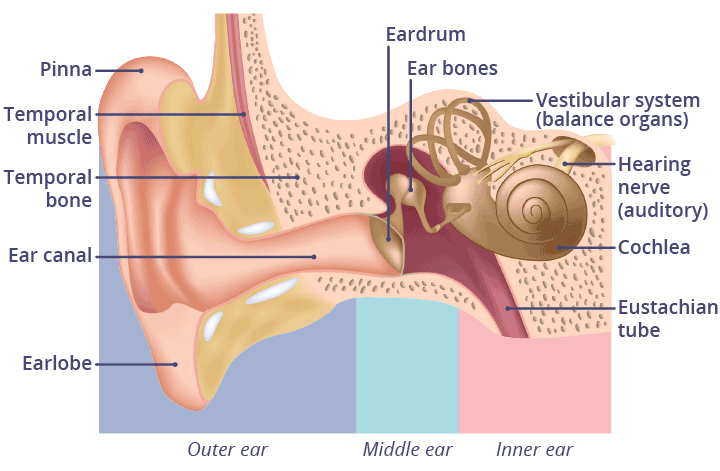
Hearing is fundamental to speech development, building relationships, and sensing danger. Having hearing impairments from an early age can delay other important developmental milestones related to speech, language, and communication.
The ear and the brain work together to capture and process external sound waves into meaningful noise. Damage to structures within the ear or the brain can disrupt this process.
Hypoxic-ischemic injuries often affect how the auditory nerves receive and process sound, increasing the risk of potential hearing impairments. In general, there are three main categories for hearing loss:
- Conductive Hearing Loss: Damage to the outer, middle or canal of the ear blocks sound waves from reaching the inner ear. This is the most common type in children, which causes quiet or muffled hearing, and is the most treatable.
- Sensorineural Hearing Loss: Permanent hearing loss caused by damage to the inner ear that causes muffled or distorted sound.
- Mixed Hearing Loss: A combination of conductive and sensorineural hearing loss. The rarest and most severe form of hearing impairment.
One study found nearly 30% of children with CP have impaired hearing, with a higher risk of impairment (~62%) in children with dyskinetic cerebral palsy.
Blindness & Vision Impairments
Children with vision impairments are at a major disadvantage for meeting expected developmental milestones. Sense of sight plays an invaluable role in not only visual development, but also in cognitive, social, and motor development.
Brain injuries at birth can damage neural pathways and critical structures required to see clearly. And while these kinds of injuries are usually rare, their probability of happening increases when healthcare providers make preventable mistakes.
Vision impairment can range from poor vision or an inability to see particular colors (color blindness) to no vision (blindness). Low or poor vision is a permanent visual impairment that ordinary glasses, contact lenses, medication, or surgery cannot correct.

People with low vision, blurred vision, or loss of side vision may find it challenging to do everyday activities, even with glasses or contact lenses, such as reading a newspaper. Blindness is defined as a lack of vision or complete inability to see.
If a child is partially blind, they have very limited vision and may be able to only see shapes, general colors, or changes in lighting. Complete blindness is when a child is unable to see anything, including light. Visual impairments and blindness in children may result from genetic or prenatal factors.
Cortical visual impairment (CVI) or cortical blindness is a neurological disorder caused by damage to the visual systems in the brain. Normally, the eyes send electrical signals to the brain, and the brain interprets those signals as images. However, if a child has cortical vision impairment, their brain has trouble processing what they are seeing.
Children who suffer from CVI usually have cerebral palsy (CP) and other developmental disabilities commonly caused by birth injuries. CVI can have devastating long-term effects on a child's life.
Seizures and Epilepsy
A seizure occurs from abnormal electrical signals firing within the brain, causing convulsions, lack of consciousness, and uncontrollable bodily movements. Epilepsy is a disorder that makes the brain more prone to these electrical signals misfiring.
Between 30 and 50 percent of children with cerebral palsy have seizure disorders and are more common in children with limited mobility or the inability to walk. Seizures can range in type and severity. The main types of seizures that children with cerebral palsy experience include:
- Subtle Seizures
- Clonic Seizures
- Myoclonic Seizures
- Tonic Seizures
- Infantile Seizures
Intellectual & Learning Disabilities

Although cerebral palsy is defined by a disorder of movement, damage to specific parts of the brain can cause other symptoms, including learning disabilities.
A learning disability is defined by an atypical processing of information that typically affects how an individual reads, writes, or does math. Learning disabilities do not affect an individual’s intelligence; rather, they affect how well certain information is processed.
In contrast, an intellectual developmental disorder (IDD) is a limitation in mental abilities that affect learning, intelligence, and everyday skills. Between 40 and 50 percent of children with cerebral palsy have an intellectual disorder.
According to a study of children with cerebral palsy, about 59% had reading, writing, or mathematics disorders. Common learning disabilities include:
- Dyslexia: difficulties with reading, writing, word accuracy, spelling, and reading comprehension.
- Dysgraphia: the impairment of written expression, including grammar, punctuation accuracy, spelling accuracy, and handwriting.
- Dyscalculia: difficulties with mathematical-related concepts and numeracy skills.
Behavioral & Mental Health Issues

Children with cerebral palsy are at a higher risk of developing behavioral and mental health issues compared to the general population. Areas of the brain responsible for emotional regulation may be damaged and increase the risk of behavioral issues.
One of the main reasons that children with CP experience anxiety, hyperactivity, or aggression, for example, is due to communication difficulties. When their needs, wants, and problems cannot be communicated because of a speech disorder or impairment, it is natural that a child may be frustrated.
Depression and anxiety symptoms are prevalent in over 30% of adolescents with cerebral palsy. By kindergarten age, over half of children with CP meet diagnostic criteria for a psychiatric disorder. Some reasons for mental health and behavioral disorders in children with cerebral palsy include:
- Sleep disturbances
- Academic challenges and learning disabilities
- Social impairment
- Intellectual disability
Attention-Deficit Hyperactivity Disorder (ADHD)
Attention-deficit and hyperactivity disorders occur in about 30 percent of children with cerebral palsy. These deficits are typically accompanied by short attention spans and executive dysfunction that interfere with daily functioning.
ADHD is characterized by chronic inattentiveness, including listening issues, difficulties in organization, and focus problems. Impulsiveness and hyperactivity are common as well, which may manifest into restlessness and impatience.
Autism Spectrum Disorder (ASD)
The prevalence of autism spectrum disorder (ASD) in children with CP ranged from 3.4 to 30 percent across ten studies. ASD is a developmental disability caused by differences in the brain and can often result from complications at birth.
According to the CDC, ASD affects social communication and interaction skills. Signs and symptoms of ASD include:
- Avoided eye contact
- Lack of facial expressions
- Restricted or repetitive behaviors or interests
- Delayed language skills
- Delayed cognitive or learning skills
- Unusual eating and sleeping habits
- Lack of fear or excessive fear
This is not an exhaustive list of signs and symptoms. If you suspect your child with cerebral palsy has ASD, early intervention can help significantly. A trained physician and team of healthcare providers can assess your child for ASD and create a plan for any therapies or treatments needed.
Cerebral Palsy Malpractice Attorneys
Our top rated cerebral palsy lawyers specialize in birth injury malpractice. We understand how medical mistakes during delivery can cause brain injuries that permanently impact a child’s life.
If your baby’s preventable birth injuries led to a cerebral palsy diagnosis, don’t hesitate to contact our firm. We can answer difficult legal and medical questions and investigate the facts on your behalf.
Free Legal Consultation
Cerebral Palsy Lawyers
(888) 987-0005Our Cerebral Palsy Lawyers are available to meet you in your home or the hospital.
What Our Cerebral Palsy Lawyers Do For You
Our vast network of medical experts and in-house nursing staff and nurse-attorneys gives us the edge over our competition. When we take your case, we assign you with not just an attorney but an entire medical team. This team includes cerebral palsy attorneys, experienced nursing advocates, and seasoned medical experts.
We understand the extensive care your child needs to assist with their cerebral palsy symptoms. Your team is available to assist with any day-to-day treatment you or your child may need. This includes assistance with obtaining medical records, scheduling doctors’ appointments, providing transportation, and any other problems that may arise.
We offer all of this on a contingency fee basis. This means you will not pay any fees until after we win your case and secure a settlement. We have an unmatched track record of birth injury results that sets us apart from other birth injury law firms.
Recent Birth Injury Settlement:
Birth Injury settlement against a hospital in which nurses and physicians failed to detect a uterine rupture during delivery causing an HIE event which caused cerebral palsy. Our dedicated cerebral palsy birth injury lawyers recovered $9,200,000 for the family to help with future medical expenses and developmental therapy.

Did Medical Malpractice Cause My Child’s Cerebral Palsy?

A cerebral palsy diagnosis can stem from a multitude of birth complications that interact to cause brain damage. But no matter the source, parents deserve to know when preventable medical mistakes amplify the complications of their child’s conditions.
Missing pregnancy complications, improperly monitoring fetal heart rates, or delaying C-sections can all lead to a baby’s preventable brain injury. If a family believes medical negligence worsened a child’s brain damage at birth, legal support may be an option. A cerebral palsy lawyer can review the medical records and circumstances to assess whether a claim exists.
Families who have experienced the effects of brain injuries from negligent medical care deserve to know whether they were avoidable. Our cerebral palsy attorneys specialize in birth injury malpractice, helping families seek compensation when negligence causes lifelong conditions.
Our team will thoroughly investigate the facts, holding responsible parties accountable by pursuing medical malpractice claims.
What Is the Statute of Limitations in a Birth Injury Lawsuit?

A statute of limitations (SOL) is a law that sets a time limit on how long an injured person has to file a lawsuit after an accident.
It is essential to understand that statutes of limitations vary based on the case and the state where you file. For instance, the deadline for birth injury claims is typically different from other claims, such as injury to private property.
Generally, the clock starts ticking on the date the injury occurred. However, there are exceptions to this rule. In some cases, the statute of limitations starts when a person discovers or reasonably should have discovered an injury. When dealing with government agencies, SOLs can become even more complex.
For example, if the party that injured you was:
- A federal employee
- Employed by a military hospital, Veterans Administration facility, or a federally funded medical entity
Birth Injury Claim Under Federal Tort Claims Act (FTCA)
You may need to file a birth injury claim under the Federal Tort Claims Act (FTCA). In FTCA cases, claimants must go through certain administrative procedures before filing a lawsuit. In some states, you may have less time to give notice if:
- The negligent party was a local or state government hospital
- The doctors and medical providers are employees of a governmental entity
If you file your case outside of the statute of limitations, the court will typically dismiss it. This means you will not be eligible to recover compensation for you or your child’s injuries.
Determining when a statute of limitations begins on your case can be tricky. Our cerebral palsy attorneys can tell you important cutoff dates in your state.
How Can Our Cerebral Palsy Attorneys Help?
A detailed expert review of the facts and circumstances of your pregnancy and your child's birth can reveal many things. Namely, it can determine whether a child’s cerebral palsy diagnosis and related symptoms were the result of medical malpractice.
*Not all cerebral palsy is caused by medical negligence during birth — some may stem from genetic factors, prenatal issues unrelated to care, prematurity, or unknown causes. Our National Cerebral Palsy Lawyers offer free case evaluations with a medical expert to determine whether negligence played a role in your child's birth injury.
Our Process
Our team of cerebral palsy attorneys specialize in birth injuries and can help assess your potential cerebral palsy case. We use our detailed medical negligence case review process to take in your information and begin learning more.
We start by gathering information about your pregnancy by examining records to determine what happened during and after your delivery. This includes evaluating the fetal heart rate strips during labor and any action medical professionals took in the NICU.
We will call in skilled medical experts who review your records and provide insight into where medical professionals went wrong. If we feel medical negligence caused or worsened your baby’s cerebral palsy symptoms, we meet with you to discuss further.
At no point in our legal intake process will we ask you to pay anything. The medical review of your case and the consultation are free. We only receive payment once you do. The sooner you reach out, the sooner we can investigate your case and gather the evidence to support your claim.
We work on a contingency fee basis, meaning you will not pay any legal fees until we win your case. We do not pursue any medical malpractice cases unless we fully believe we can win.
Contact us today to schedule your free consultation by calling our toll-free line at (888) 987-0005. You can also reach us by filling out our online request form.
National Birth Injury Law
Our National Birth Injury Attorneys, nurses, and support staff understand that parents of children with birth injuries feel overwhelmed. So, every client has the attention and support of a team of trained, compassionate professionals. But we don’t just offer compassion.
We offer a process to help you discover whether your child’s birth injury, HIE, cerebral palsy or brain injury at birth was caused by medical malpractice.
Call our offices today at (888) 987-0005 for experienced assistance in a free consultation.
Quick Links
Testimonials
- Lyric C. I feel like our voice was heard in a sense of what can possibly go wrong in a delivery and finding us answers. I feel with our settlement, we are now in a comfortable position to provide for our son.
- Lyssa L. They are not just people that say “hey let's get you money and let's go” The law firm was very thorough with us. It was awesome. I don't want to cry, because I think about and it's amazing that they were able to help me and that we were able to help my son and get the story out there.
- Jay C. Throughout the process, one thing was clear to us, the ultimate interest of our child was the utmost concern of Max and his team and as parents navigating a situation like that, that was refreshing to know we had them firmly on our side. I highly recommend them.
Popular Cities
- ★ Dallas Birth Injury
- ★ Houston Birth Injury
- ★ Atlanta Birth Injury
- ★ Chicago Birth Injury
- ★ Philadelphia Birth Injury
Locations
★ Dallas
11551 Forest Central Drive, Ste. 300
Dallas, TX 75243
★ Houston
12929 Gulf Freeway, Ste. 111
Houston, TX 77034